
DR Congo Ebola Outbreak Spreads as New Hotspots Emerge
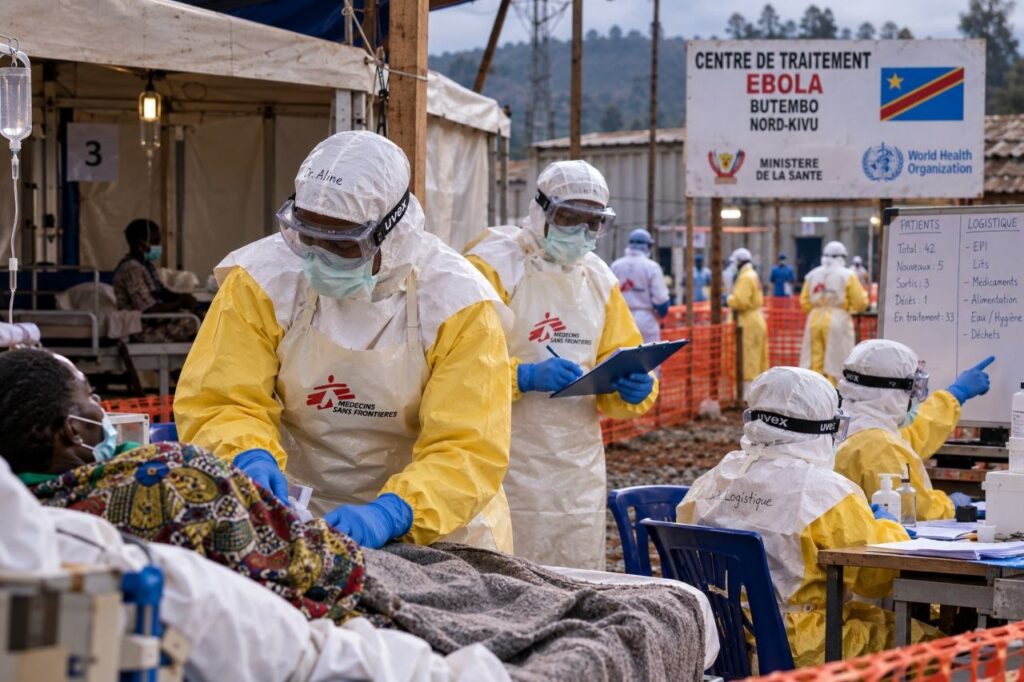
The ongoing Ebola Virus Disease (EVD) outbreak in the Democratic Republic of the Congo (DRC) continues to expand, with international medical organizations warning that transmission is accelerating like a wildfire across several provinces. Unlike the majority of previous outbreaks in the region, the current health emergency is driven by the Bundibugyo virus strain, prompting intensified responses from health authorities and humanitarian agencies.
Spreading Hotspots in North Kivu and Ituri
Health authorities officially declared the EVD outbreak on May 15, 2026, following laboratory confirmations in Ituri Province. Since then, the virus has widened its geographic footprint significantly. According to reports from humanitarian organizations and international health monitoring bodies, confirmed cases have been documented across 63 health zones spanning seven provinces, including Ituri, North Kivu, South Kivu, Haut-Uélé, Bas-Uélé, Tshopo, and Sud-Ubangi.
Ituri remains the primary epicentre of the outbreak, accumulating thousands of confirmed cases since the onset. Meanwhile, North Kivu is bearing an increasing share of the burden, with new hotspots multiplying rapidly and straining local health infrastructure. Medical humanitarian groups report that North Kivu has registered some of the highest case fatality rates in the current epidemic, compounding challenges regarding patient access to specialized care.
Regional Concerns and Broader Spread
The extensive transmission within the DRC has triggered heightened cross-border health surveillance. Recently, the outbreak drew renewed international attention after Kenya announced its first confirmed case and subsequent fatality associated with the ongoing regional epidemic. Public health investigations revealed that the individual contracted the illness while residing in the DRC before traveling through neighboring areas.
While Uganda had previously been declared free of the outbreak in late August 2026 following successful containment efforts, the recent cross-border movements have prompted renewed scrutiny from public health officials. Port health authorities and screening personnel have stepped up surveillance protocols at major transit hubs to mitigate further regional dissemination.
Response and Medical Interventions
In response to the escalating crisis, organizations such as Doctors Without Borders (Médecins Sans Frontières, or MSF) are collaborating closely with the DRC Ministry of Health and international partners. Relief operations include expanding specialized treatment centers, establishing triage and simulation facilities, and reinforcing infection prevention and control measures across affected health zones.
Health agencies continue to monitor epidemiological updates closely as response teams work to manage active transmission chains, improve clinical care delivery, and reinforce preparedness measures in neighboring countries.