New York Governor Kathy Hochul declared a statewide disaster emergency following a concerning surge in measles cases across under-immunized rural communities. The executive order marks the first such disaster emergency declared by a U.S. state since infections began rising nationally in 2025.
State health figures show that New York has reported 108 measles cases this year through October 3. Of those infections, 92 have been documented since July 15, spreading across 18 counties. While New York City has recorded seven cases, the vast majority of the state’s total is concentrated in rural areas, with the Finger Lakes region seeing notable clusters. Otsego County, home to the National Baseball Hall of Fame and Museum in Cooperstown, has reported 20 cases, the highest count of any single county in the state.
Emergency Measures and Vaccine Expansion
The disaster emergency declaration activates a comprehensive emergency management plan granting the state broader authority to coordinate swift testing and vaccination measures. The executive order remains in effect through November 4.
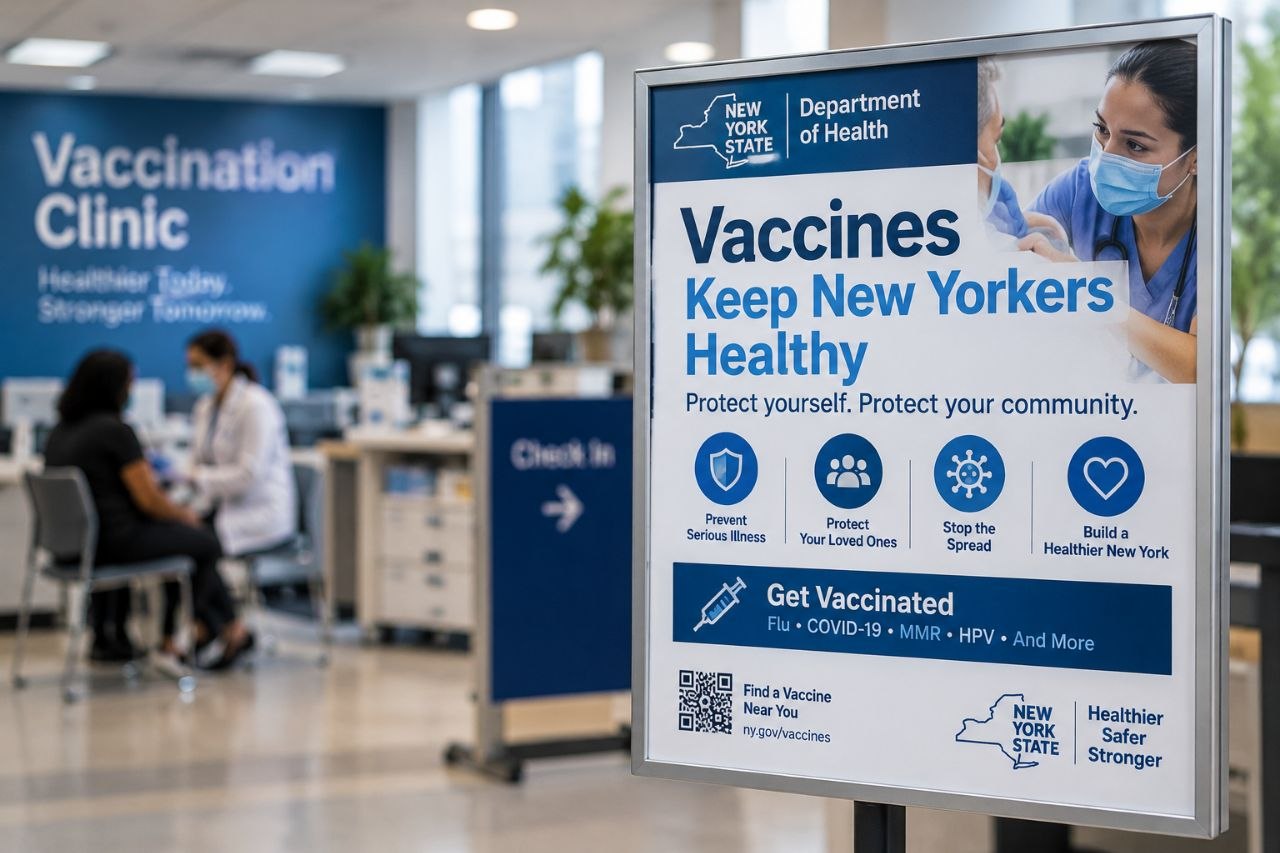
To combat the transmission of the highly contagious virus, the state has expanded the pool of healthcare professionals legally authorized to administer the measles-mumps-rubella (MMR) vaccine. Officials hope the regulatory flexibility will accelerate immunization efforts in pockets where vaccination rates have lagged.
Regional Context and National Numbers
New York’s emergency declaration comes as neighboring Pennsylvania grapples with an even larger outbreak. Pennsylvania health officials confirmed that the state’s total has surpassed 1,000 cases, marking its worst measles outbreak in more than three decades. The executive order notes that many of Pennsylvania’s infections are centered in rural counties bordering New York, resulting in five deaths as of early October.
Nationwide, the Centers for Disease Control and Prevention (CDC) reported 3,887 confirmed measles cases across the United States by October 1, accompanied by 42 distinct outbreaks. This reflects a continued national resurgence compared to 2,289 cases recorded throughout 2025 and just 285 cases in 2024. State authorities are urging residents in affected regions to verify their vaccination status and seek out the MMR vaccine to curb further spread.