Restore Vision Inc. has released encouraging interim results from its ongoing first-in-human Phase 1/2 clinical trial evaluating RV-001, an investigational G protein-coupled receptor (GPCR)-based optogenetic gene therapy designed to restore vision in patients suffering from advanced retinitis pigmentosa. The early data demonstrate notable vision improvements among participants, marking an important step forward in the field of mutation-agnostic vision restoration.
Early Phase 1/2 Trial Results and Visual Improvements
According to the interim data reported by Restore Vision, patients in the trial’s high-dose cohort experienced significant positive responses. All three patients in the high-dose group achieved light perception or better within just one month following treatment. Furthermore, one of these patients demonstrated measurable chart-based visual acuity, which was evaluated using the Berkeley Rudimentary Vision Test.
Participants in the low-dose cohort also showed clinical progress. One out of three patients in the low-dose group advanced to light perception at approximately three months post-treatment. These initial improvements were reinforced by concordant gains across several additional evaluations, including full-field stimulus testing and functional vision assessments that measured mobility and object recognition tasks.
Understanding the Technology and Manufacturing Partnerships
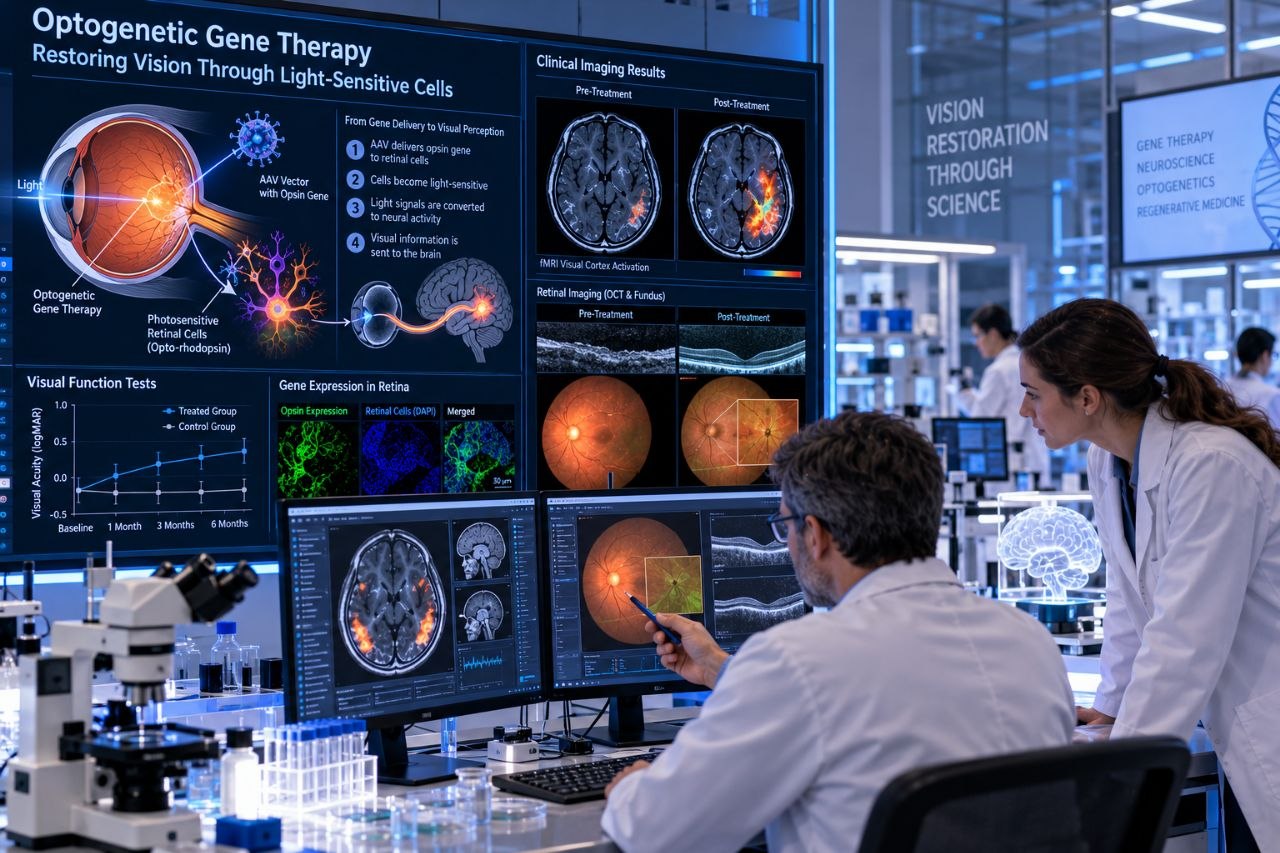
RV-001 represents an advanced approach in biotechnology, utilizing an adeno-associated virus (AAV) vector to deliver bioengineered, light-sensitive proteins to surviving retinal cells. Because optogenetic therapies are designed to bypass damaged photoreceptors and directly stimulate surviving retinal layers, they hold the potential to improve visual function regardless of the patient’s underlying genetic mutation.
To support the clinical evaluation of RV-001, Restore Vision partnered with Forge Biologics for AAV development and cGMP manufacturing. Manufacturing activities take place at Forge’s facility in Columbus, Ohio, with drug products subsequently transported to supply clinical trial sites in Japan. This international collaboration ensures the necessary production capacity as the trial progresses through its early stages.
Next Steps in Ocular Gene Therapy
The positive signals observed in the Phase 1/2 trial of RV-001 contribute to a broader wave of advancements in retinal gene therapy. Other companies and treatments, such as Beacon Therapeutics’ developments in X-linked retinitis pigmentosa (XLRP), are also marking milestones in clinical evaluation. As Restore Vision continues its first-in-human study, researchers and clinicians will monitor longer-term safety and durability data to better understand the full therapeutic potential of optogenetic interventions for patients experiencing severe retinal degeneration and blindness.