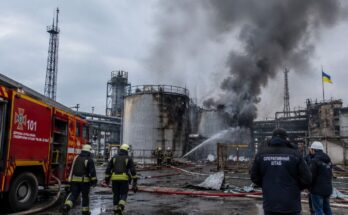
Explosions rattled Saudi Arabia’s capital on Thursday morning as escalating hostilities between the Iran-backed Houthi movement in Yemen and a Saudi-led military coalition intensified significantly. The blasts in Riyadh followed a deadly wave of Houthi strikes targeting Saudi airports and oil facilities, marking a severe escalation in the ongoing regional conflict.
The recent violence follows authorities confirming that previous Houthi strikes on airports in Riyadh and Abha had resulted in three deaths and dozens of injuries. These attacks were described as some of the deadliest the kingdom has faced since the Saudi-led coalition began bombing Houthi positions in Yemen earlier this year. In response to the airport strikes, a coalition spokesperson stated that military forces launched retaliatory air raids targeting dozens of Houthi military sites, including command centers and missile storage facilities.
Escalating Missile Strikes and Regional Fallout
The conflict has seen a continuous cycle of retaliatory actions between Yemen’s Houthi rebels and the Saudi-led coalition. Earlier engagements involved Houthi ballistic missile and drone attacks directed at Saudi airports, including Abha International Airport, as well as King Khalid Air Base and Prince Sultan Air Base. These initial rebel launches were stated to be in retaliation for coalition air strikes that targeted the airport in Sanaa, Yemen’s Houthi-controlled capital.
In addition to airport targets, the Houthi movement has repeatedly claimed responsibility for coordinated missile and drone strikes targeting facilities belonging to the Saudi oil giant Aramco, including installations in Riyadh and the Red Sea port of Yanbu. The intensified cross-border violence has also prompted wider geopolitical concern, with reports of high-level diplomatic and administration discussions regarding the trajectory of the conflict and regional security.
Maritime Embargo and Strategic Red Sea Tensions
As the conflict widens across land and air, the Houthi military leadership announced a maritime embargo against Saudi Arabia. The Iran-backed group declared that the embargo would take effect immediately in response to a perceived Saudi blockade on ports and airports in northwestern Yemen. Houthi officials indicated that the measure includes closing the Bab al-Mandab Strait—the critical southern gateway to the Red Sea—to Saudi vessels.
The Red Sea has emerged as a vital shipping corridor for oil shipments from Saudi Arabia, particularly as broader regional conflicts involving Iran have impacted traditional transit routes such as the Strait of Hormuz. While Saudi authorities and energy giant Aramco have faced multiple claimed strikes and emergency alerts, investigations and official responses to the latest structural impacts and security threats remain ongoing as the situation develops.