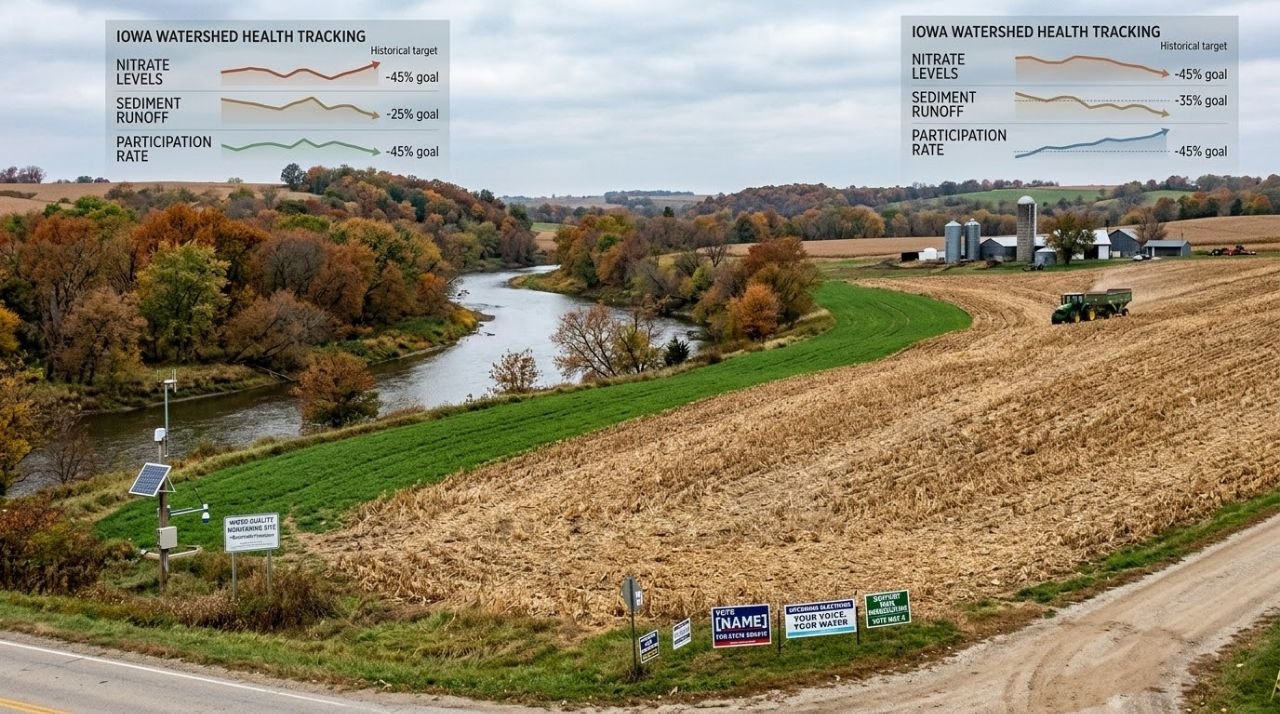
Rising cancer rates and severe agricultural water contamination have surged to the forefront of the political landscape, becoming a defining issue for voters heading into the 2026 midterm elections in Iowa. With state waterways grappling with high levels of pollutants, environmental concerns are increasingly driving voter decisions at the ballot box.
Water Quality and Iowa Cancer Rates Take Center Stage
Recent polling reveals that environmental health has captured the attention of a significant portion of the state’s electorate. A poll commissioned by the Johns Hopkins Center for a Livable Future found that a majority of Iowa voters rank water quality and environmental protection among their top five issues for the midterm elections.
The urgency behind the issue is closely tied to public health alarms. Iowa currently records the second-highest rate of new cancers nationally and stands as one of only a few states experiencing rising cancer incidence. Reports from organizations like the Iowa Environment Council and the Harkin Institute have linked these mounting health concerns to environmental factors, including nation-leading pesticide use, elevated radon exposure, and high concentrations of nitrates and forever chemicals in the state’s water supplies.
Central Iowa’s primary drinking water sources—the Raccoon and Des Moines rivers—currently rank among the top 1 percent of rivers nationwide for nitrate concentration. Polling data underscores how deeply these figures resonate with the public; a Food & Water Action survey indicated that 72 percent of Iowa voters expressed more concern over rising cancer rates than the cost of living.
Political Impact on Tight Races
The convergence of public health anxieties and environmental policy is expected to play a critical role in tight electoral contests, particularly among independent voters who make up the majority of the state’s electorate. Candidates are increasingly pressured to present concrete strategies to combat agricultural runoff and safeguard drinking water.
For instance, polls show broad bipartisan support for clean water initiatives, with a vast majority of surveyed voters indicating they would favor officials who prioritize water quality reforms. While Iowans maintain generally favorable views toward the state’s powerful agricultural sector—which contributes significantly to the local economy—the economic benefits are increasingly being weighed against the mounting environmental and health costs.
As campaigns enter their general election phases leading up to November, candidates across political lines are being forced to address water contamination and public health. How nominees respond to these concerns could ultimately decide pivotal races in a state known for close electoral battles.