Health and law enforcement officials across the United States are sounding the alarm over cychlorphine super-drug detections, a potent synthetic opioid that has been linked to dozens of fatal overdoses nationwide. Authorities warn that the emerging substance is significantly more powerful than fentanyl, triggering urgent warnings from public health departments and federal agencies.
What Is Cychlorphine and How Potent Is It?
Cychlorphine, also known scientifically as N-propionitrile chlorphine, belongs to a group of substances called orphine analogues. Forensic researchers and health experts describe the synthetic opioid as up to 10 times more potent than fentanyl. Federal data indicates that the drug has been detected in multiple states, with early hotspots appearing in places like Tennessee, where state health officials reported more than 30 fatal overdoses associated with the substance starting in late 2025.
An April 2026 notice from the White House Office of National Drug Control Policy cited at least 41 deaths in Tennessee between July 2025 and February 2026, alongside a national toll of at least 55 deaths during a similar timeframe. Wider federal data released later in the year showed that cychlorphine had been confirmed in hundreds of law enforcement encounters across nearly 20 U.S. jurisdictions. Forensic analyses from groups like the Center for Forensic Science Research and Education (CFSRE) identified the opioid in multiple toxicology specimens from fatal overdoses, noting it was the sole opioid detected in nearly half of those analyzed cases.
Federal Classification and Street Detection Challenges
In response to the growing public health threat, the Drug Enforcement Administration (DEA) classified cychlorphine as a Schedule I controlled substance in August 2026, making the possession or sale of the drug illegal under federal law. Authorities emphasize that the danger extends beyond traditional powder forms, as the substance has been discovered hidden in liquids, rocks, crystals, and counterfeit prescription tablets.
Because the synthetic opioid can be mixed across various illicit street drugs, detection and avoidance remain exceptionally difficult for users. The presence of the drug has sparked heightened concern among health departments, college campuses, and emergency medical services nationwide regarding sudden overdose risks and potential resistance to standard reversal treatments.
Public Health Guidance and Safety Warnings
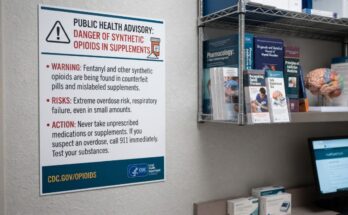
As detections continue to spread—including recent warnings issued by health officials in regions such as Los Angeles and Colorado—authorities are urging extreme caution. To reduce the risk of sudden fatal overdoses, public health agencies recommend that individuals never use substances alone, avoid mixing drugs, and ensure that reversal medications like naloxone are readily accessible.
Health officials continue to monitor toxicology reports and law enforcement encounters closely as they work to track the spread of cychlorphine and mitigate further loss of life.