
Immune Fog in Lungs May Flag Cancer Risk Years Early
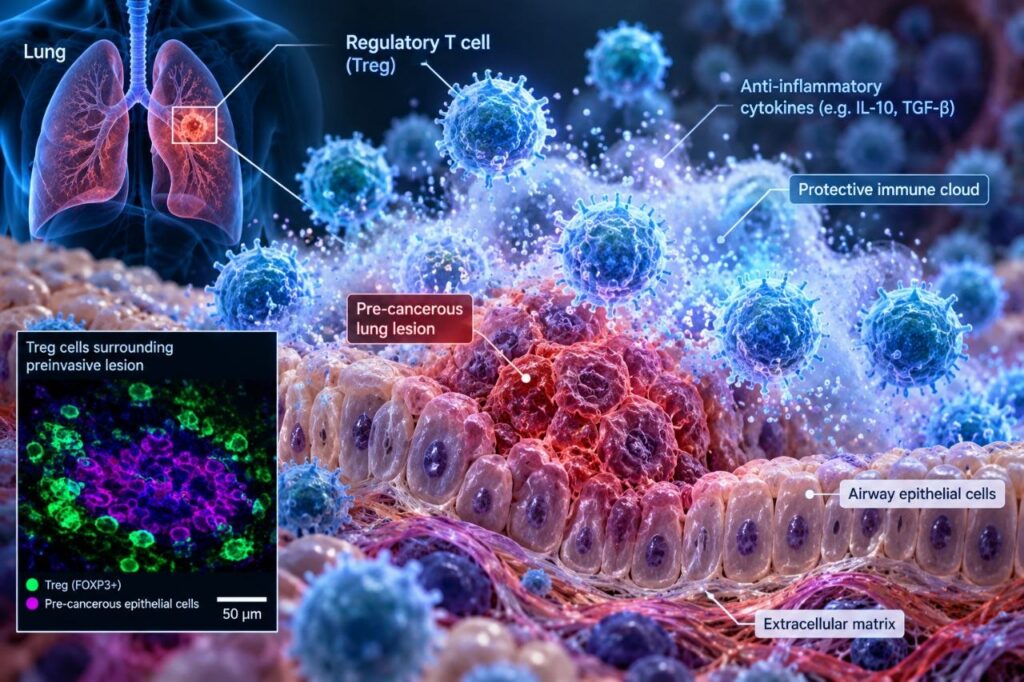
A newly discovered biological signal known as immune fog could help identify lung cancer risks years before a tumor ever develops. According to a landmark study published in the scientific journal Nature, researchers have uncovered how a specific buildup of cells in the lungs allows early-stage pre-cancers to evade detection, potentially paving the way for proactive cancer interception.
Understanding the Immune Fog and Regulatory T Cells
The research, led by scientists including Samuel Gamble and Associate Professor Dr. James Reading at the UCL Cancer Institute, focuses on specialized immune system components called regulatory T cells, or Tregs. Normally, Tregs act as biological brakes for the immune system. After active immune cells clear out a threat, Tregs step in to calm down inflammation and allow the body to heal.
However, researchers analyzing blood and tissue samples from long-running lung cancer surveillance studies discovered an abnormal shift. Months to years before full-fledged tumors formed, a cloud or fog of immunosuppressive regulatory T cells gradually built up inside the lungs. This localized buildup effectively paused the activity of cells that normally target cancerous threats, allowing pre-cancerous lesions to slip through the cracks and develop unchallenged.
Dr. Reading noted that the team was struck when multiple researchers independently spotted the unusual regulatory T cell activity during screening and tissue analyses.
Promising Results for Early Interception and Treatment
The implications of the study extend beyond mere detection. By identifying this pre-invasive regulatory T cell axis, scientists explored whether clearing the immune fog could halt tumor progression entirely. The research adds to a growing medical body of evidence suggesting that future cancer treatments could focus on intercepting the disease before it produces noticeable symptoms or advances to harder-to-treat stages.
When researchers tested drug interventions in mice to reverse this immune suppression, the results were dramatic. Clearing the regulatory T cell fog halved the proportion of mice that developed lung tumors and completely prevented the formation of large tumors. Furthermore, prototype blood tests and advanced artificial intelligence analysis tools are already being developed to track this early warning signal in humans.
Organizations like Cancer Research UK emphasize that lung cancer does not appear overnight; it typically evolves from small numbers of mutating cells into pre-cancerous lesions. By combining fog-clearing drugs, early blood screening, and advanced diagnostics, scientists hope to shift cancer care from reactive treatment to early prevention for high-risk patients.