
Francis Halzen Wins 2026 Nobel Prize in Physics for Antarctic Neutrino Hunt
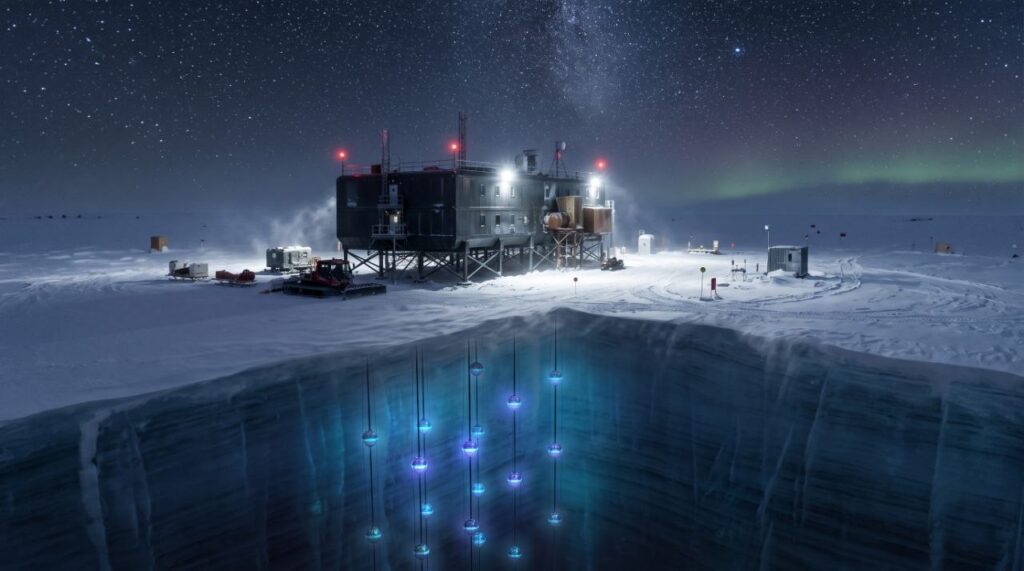
Belgian-American particle physicist Francis Halzen has been awarded the 2026 Nobel Prize in Physics for his visionary work creating an underground observatory in Antarctica to detect high-energy neutrinos. Announced by the Royal Swedish Academy of Sciences, the prestigious prize recognizes Halzen’s decisive contributions to the IceCube Neutrino Observatory and the groundbreaking discovery of cosmic neutrinos originating far beyond our solar system.
Halzen, an 82-year-old professor at the University of Wisconsin–Madison, first proposed his unconventional concept for capturing neutrinos at the South Pole in 1988. Often referred to as "ghost particles," neutrinos are notoriously difficult to detect because they pass through the Earth and the human body virtually without a trace, interacting with matter only on extremely rare occasions. Approximately 100 trillion neutrinos pass through every human body every second.
Building an Observatory Beneath the Antarctic Ice
To solve the challenge of detecting these elusive particles, Halzen realized that the vast, exceptionally clear glacial ice at the South Pole could be transformed into a massive particle detector. The location offered ideal conditions, including geological stability free from earthquakes and deep ice free from common environmental interferences.
Under Halzen’s scientific leadership and vision, researchers equipped a cubic kilometer of Antarctic ice with sensitive light sensors. When a high-energy neutrino collides with an atomic nucleus within the ice, it produces a faint flash of blue light that can be tracked by the submerged sensors. Although initial skeptics dismissed the ambitious undertaking as a cute idea that would not work, Halzen’s persistence united a massive international collaboration.
Today, the IceCube collaboration involves approximately 450 researchers across 14 countries. The facility operates as a CERN Recognized Experiment and stands as the world’s largest neutrino telescope.
Unlocking Secrets of the Distant Universe
The Nobel Committee praised the IceCube observatory for opening a brand-new window into astronomy. By capturing high-energy neutrinos, scientists can trace messengers that bring information directly from violent cosmic events, such as exploding stars and distant galaxies.
Data gathered by the Antarctic icebound observatory has proven that high-energy neutrinos originate both within and far outside our own galaxy, setting off an interstellar quest to identify the extreme cosmic environments and processes that create them. Speaking after the announcement, Halzen noted that the primary fruits of these discoveries are still ahead, emphasizing that it remains early days in understanding all that can be learned about the universe through neutrino astronomy.