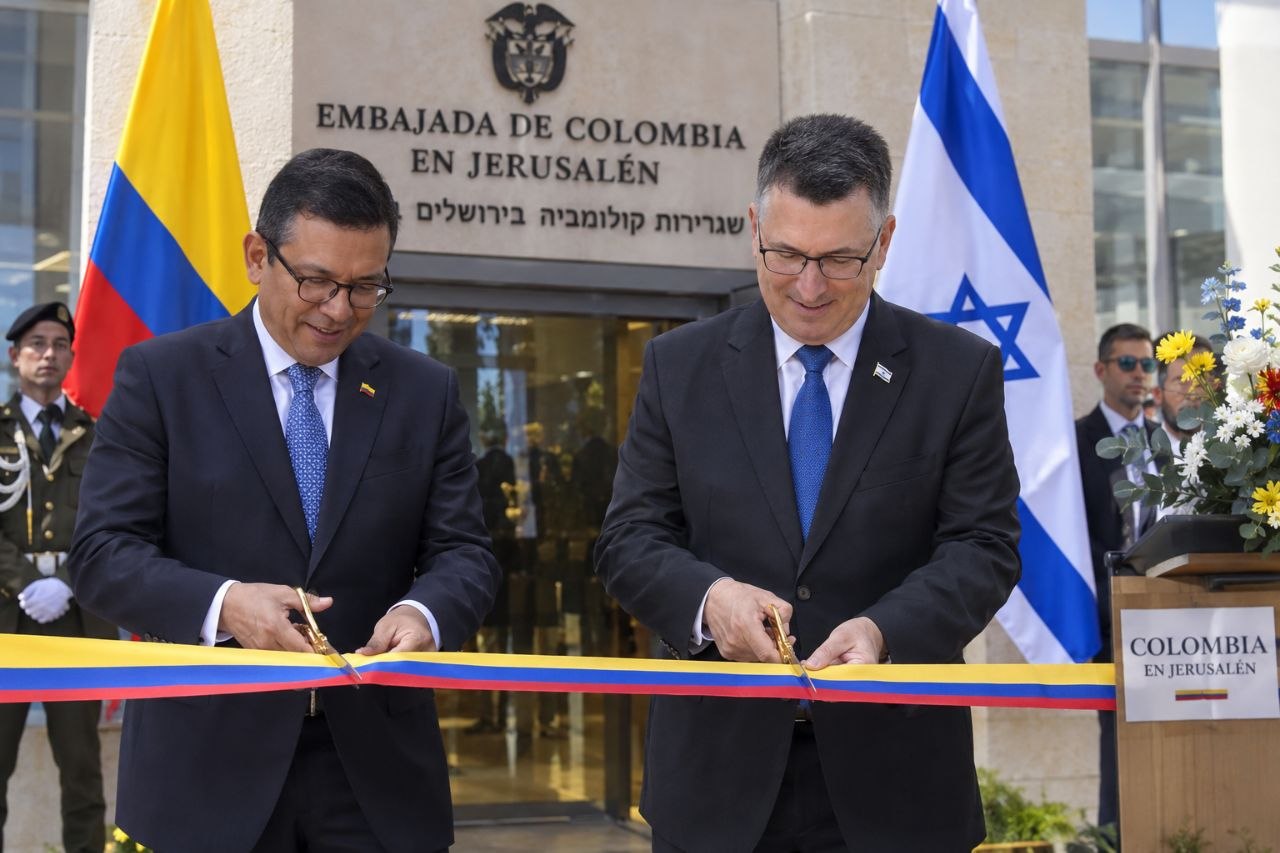
Colombia officially opened its embassy in Jerusalem, marking a dramatic shift in international relations and formalizing the restoration of diplomatic ties with Israel. The diplomatic milestone follows a major reversal in foreign policy by conservative Colombian President Abelardo de la Espriella, who assumed office with the backing of U.S. President Donald Trump and prioritized mending relations after a period of sharp estrangement.
During the inauguration ceremony, Colombian Foreign Minister Omar Bula cut the ribbon alongside Israeli Foreign Minister Gideon Sa’ar. Bula described the embassy opening as a visible expression of his country’s determination to rebuild dialogue, strengthen mutual trust, and establish an agenda that yields tangible benefits for citizens of both nations.
A Major Policy Reversal on Israel
The embassy opening reverses a severe diplomatic rift initiated in 2024 by former Colombian President Gustavo Petro. During his tenure, Petro severed diplomatic relations with Israel and accused the country of genocide over its military operations in the Gaza Strip—allegations that Israel strongly rejected. Following the break, bilateral ties that had spanned nearly seven decades were frozen.
President de la Espriella made restoring the alliance a central campaign promise. Israeli Foreign Minister Sa’ar praised the fulfillment of that pledge during Wednesday’s ceremony, calling it a day of celebration for bilateral relations and for Jerusalem as Israel’s capital. Sa’ar noted that Colombia’s decision makes it the tenth foreign government to establish an embassy in the city.
Renewed Security and Economic Cooperation
Alongside the embassy inauguration, Colombia has moved quickly to rebuild practical cooperation. In early October, the administration appointed Tania Gilinski Bacal as the new ambassador to Israel, tasking her with deepening trade ties and expanding cooperation across security, intelligence, cybersecurity, and information sharing.
Historically, Colombia and Israel have maintained close security ties, with the South American nation utilizing Israeli-manufactured rifles and fighter-bombers within its military arsenal. Officials from both sides emphasized that the renewed partnership will build upon these long-standing defense and technological links, even as international debates regarding the disputed status of Jerusalem persist.