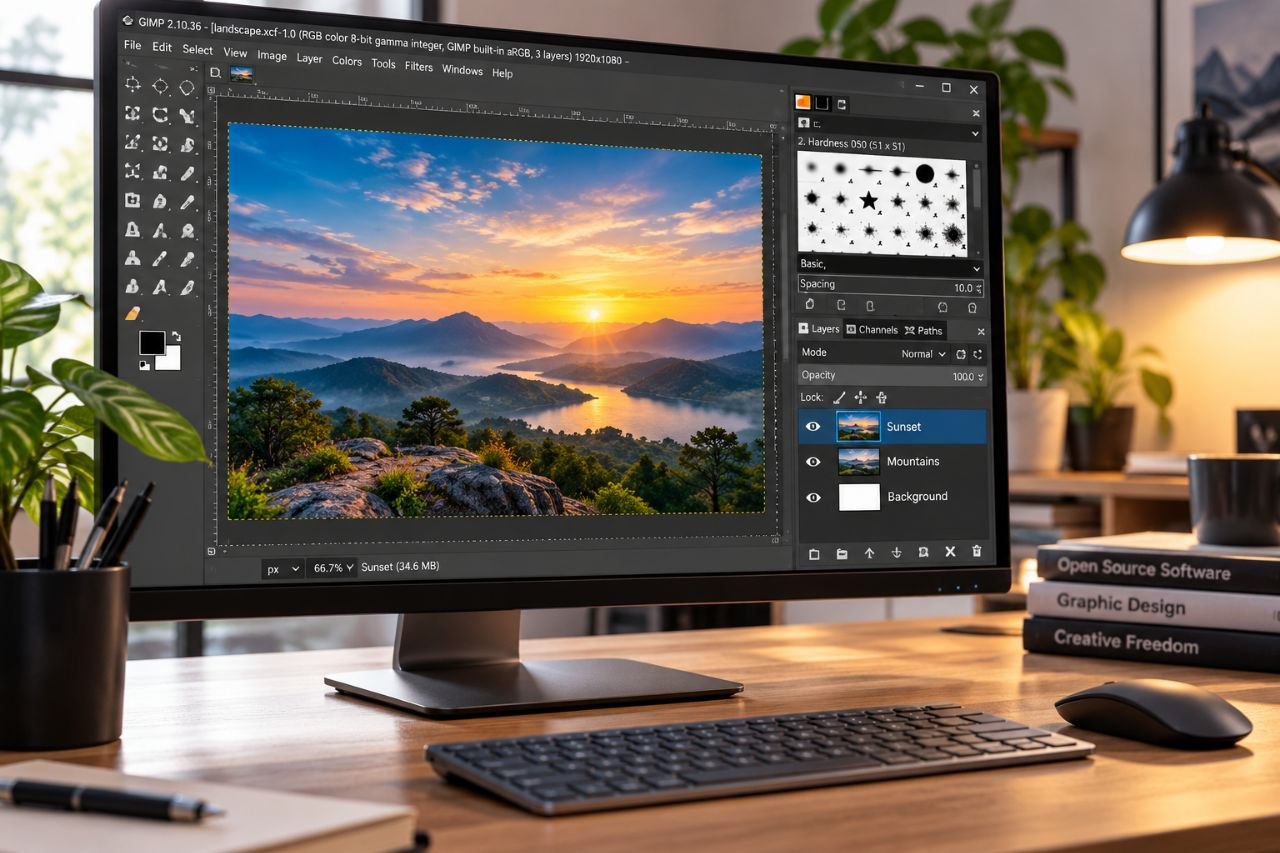
An Atlanta-based software developer has sparked widespread discussion across the tech industry after releasing a suite of free, open-source applications designed to replicate Adobe’s flagship creative tools. Developer Brandon Thomas announced the project, known as ArtCraft, following a reverse-engineering effort accelerated by artificial intelligence.
Thomas stated that he used Anthropic’s Claude Opus 5.5 and the Rust programming language to build clean-room replacements for closed-source software. Declaring that “software is over” on social media, Thomas pointed to his frustration with traditional subscription models—specifically referencing Adobe’s $150 million settlement with the US government over cancellation fees—as primary motivation for the project.
What Is Included in the ArtCraft Suite?
Originally starting out last year as a controllable AI tool for artists focused on precise post-generation editing, ArtCraft recently pivoted into a full collection of seven open-source applications. The suite aims to mimic the layouts, user interfaces, and core functions of Adobe’s most popular programs.
Among the newly released alternatives are PhotoCraft for photo editing functioning as a Photoshop alternative, VectorCraft for vector design mimicking Illustrator, FilmCraft for video editing resembling Premiere, and LightCraft serving as a Lightroom substitute. Additional tools target software mirroring InDesign, After Effects, and Acrobat Pro. The applications are available built in Rust, alongside WebAssembly versions that allow users to run the programs directly inside a web browser without subscription fees.
Capabilities, Limitations, and AI Integration
While the release has drawn massive attention on platforms like Reddit and Hacker News, tech experts and online commentators have noted that the software is currently in a super early alpha state. Users and reviewers have pointed out various bugs and missing capabilities, though Thomas has set an ambitious target of reaching 100 percent functional parity within a single month.
Notably, the ArtCraft suite is designed to be agent-native. The software includes built-in AI integration that allows artificial intelligence models to interact directly with tools and menus over a JSON control channel and an Model Context Protocol (MCP) server. This setup is intended to let users command an AI to create art and perform editing tasks directly inside the software interface.
The rapid development timeline has fueled intense debates among developers regarding the shifting threshold for software creation. While legacy creative workflows have relied on Adobe’s industry standards for decades, projects like ArtCraft demonstrate how advanced AI models can drastically lower the barrier for individual developers attempting complex reverse-engineering tasks.