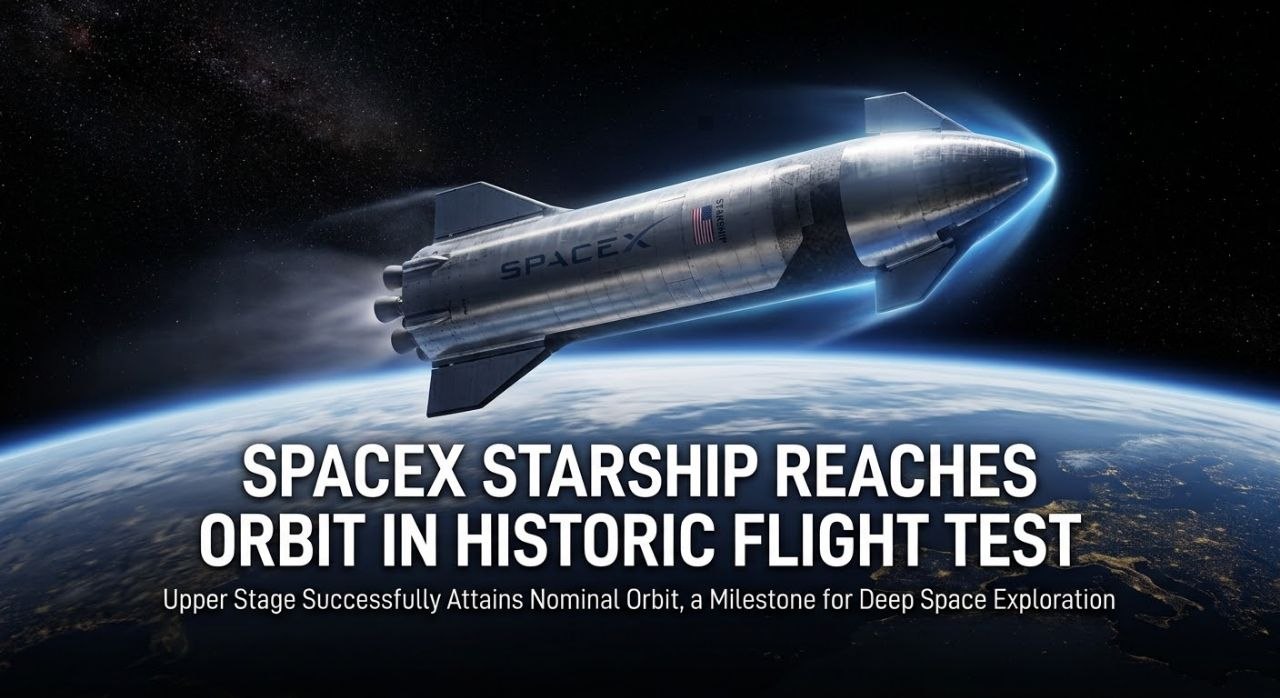
SpaceX has officially marked a monumental milestone in aerospace history by successfully launching its massive Starship rocket on its first-ever flight to reach orbit. The unprecedented test flight demonstrated the incredible power and capability of the world’s largest operational launch system, capturing the attention of space enthusiasts and industry experts worldwide.
Historic Starship Test Flight Reaches Orbit
The highly anticipated launch pushed the boundaries of modern rocket science. Although engineers ultimately cut the mission short, bringing the spacecraft back to Earth earlier than initially planned, the primary objective of achieving orbital trajectory was successfully met. This pivotal achievement brings humanity one step closer to fully reusable, deep-space transportation systems.
Implications for Future Moon Missions
While the successful orbital insertion is a massive win for SpaceX, analysts and space agencies are closely monitoring engine performance data. Potential engine anomalies could influence upcoming timelines for NASA’s ambitious Artemis moon missions, which heavily rely on the Starship architecture to land astronauts back on the lunar surface. As SpaceX reviews telemetry data, the aerospace community eagerly anticipates the next steps in humanity’s return to the Moon.