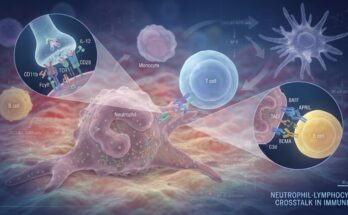
A groundbreaking study published in the journal Nature has uncovered a potential driving cause behind systemic lupus erythematosus, offering a fresh paradigm for understanding autoimmune diseases. Researchers found that T cells and B cells in lupus patients recognize splicing-derived neutrophil neoantigens, pointing to mutated immune cells as a possible spark for the body’s internal self-attack.
Breakthrough Discovery in Cellular Immunology
The study, titled “T and B cells recognize splicing-derived neutrophil neoantigens in lupus,” was co-authored by senior researchers including teams from UW Medicine and the La Jolla Institute for Immunology in San Diego. Published on October 28, 2026, the findings demonstrate that patients with lupus harbor mutated immune cells that may signal the dangerous self-directed immune responses responsible for severe tissue and organ damage.
Autoimmune conditions are fundamentally characterized by friendly fire within the immune system, where T cells and B cells erroneously target healthy cells and tissues. While the root cause of lupus has remained elusive since it affects approximately 1.5 million Americans—nine out of ten of whom are female—this new study provides a critical clue by identifying specific neoantigens involved in the process.
Parallels to Anti-Tumor Immunity
Interestingly, the production of neoantigens shares conceptual parallels with anti-tumor immunity, which is the specialty of co-author Dr. Stephen P. Schoenberger, a professor in the laboratory of cellular immunology at the La Jolla Institute for Immunology. In oncology, tumor-specific peptides are recognized as foreign by the body, prompting T cells to attempt to eliminate the cancer cells. In the context of lupus, however, similar mechanisms appear to misfire, causing immune cells to raise red flags against the body’s own neutrophils.
Although the research marks a major milestone in rheumatology and immunology, scientists emphasize that more investigations are required to establish whether mutated neutrophils definitively trigger the cascade of inflammation seen in clinical lupus cases.
Funding and Future Directions
The published research received substantial financial backing from several key institutions. Contributors include the National Institutes of Health under multiple grant numbers, the Briger Foundation for Oncology Research, the TIRTL Bluesky Program, and ALSAC at St. Jude.
As the scientific community digests these findings, researchers hope the identification of splicing-derived neutrophil neoantigens will pave the way for targeted therapies and diagnostic advancements for an incurable disease that has long baffled medical professionals.