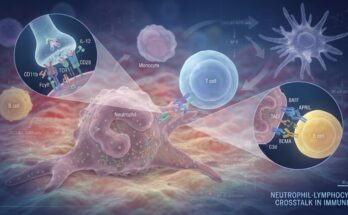
A groundbreaking study published in the scientific journal Nature has uncovered a potential mechanism behind systemic lupus erythematosus (SLE), suggesting that mutated front-line immune cells may trigger the body to attack its own tissues. The research points to aberrant mRNA splicing in neutrophils, which creates novel protein fragments known as neoantigens that are recognized by T and B cells.
The study was conducted by a collaborative research team including investigators from the University of Washington (UW) Medicine and the La Jolla Institute for Immunology in San Diego. The paper, titled “T and B cells recognize splicing-derived neutrophil neoantigens in lupus,” offers a fresh perspective on the complex biological drivers of an autoimmune disease that has long baffled medical researchers.
How Neutrophils Trigger Immune Self-Attack
Lupus is a chronic autoimmune disease that affects an estimated 1.5 million Americans, with approximately nine out of ten diagnosed individuals being female. Despite its prevalence, the root cause of the disease has remained elusive, and no cure currently exists. Symptoms often flare up and subside unpredictably over time.
To investigate underlying causes, the researchers analyzed freshly drawn blood samples from adult patients with SLE, healthy individuals, and patients with rheumatoid arthritis serving as disease controls. The SLE cohort included 34 participants recruited through the UW Division of Rheumatology Biorepository at UW Medical Center in Seattle, featuring a typical spectrum of disease severity and medication use.
Upon examining white blood cells, the scientists discovered that neutrophils—which normally act as a front-line defense against infections—contained numerous aberrantly spliced gene transcripts in lupus patients. This abnormal mRNA splicing did not appear in healthy donors or in patients with rheumatoid arthritis. Furthermore, the analysis showed that T cells and B cells in lupus patients were capable of recognizing these splicing-derived neutrophil neoantigens.
Implications for Future Research and Treatment
The discovery of these neoantigens introduces a new paradigm for understanding autoimmune diseases. Researchers theorize that the production of, and subsequent immune response to, these neoantigens may fluctuate over time, which could potentially account for the waxing and waning nature of lupus symptoms and flare-ups.
Despite the significance of the findings, the study’s authors urge caution. They emphasize that determining whether these novel amino acid sequences play a direct, causative role in lupus pathology requires additional investigation. Researchers note that such significance can ultimately be validated only through clinical trials utilizing targeted agents designed to block the production of these abnormal splicing products.
If follow-up research confirms that splicing-derived neoantigens drive the autoimmune attack, the discovery could fundamentally reshape how scientists approach the treatment of lupus and potentially other autoimmune conditions.