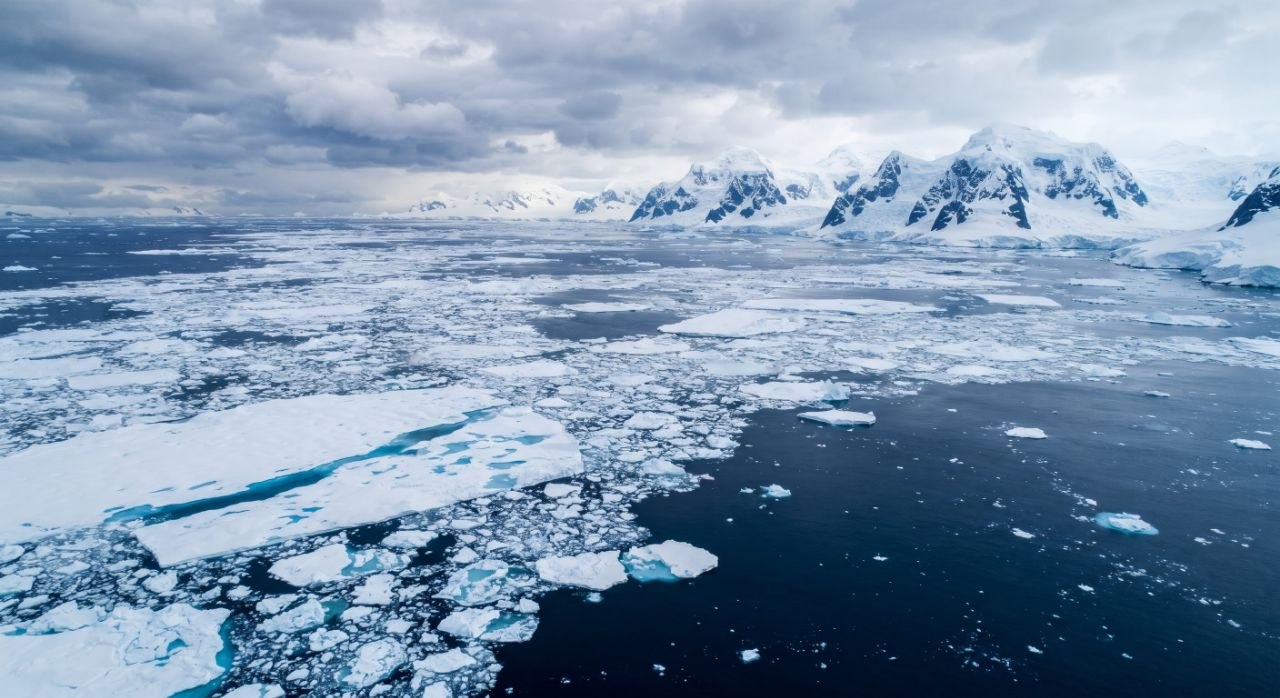
A sharp and unprecedented decline in Antarctic sea ice has triggered a major reversal in the properties of a vast Southern Hemisphere ocean layer, according to new scientific research. Published in the journal Nature Climate Change, the study reveals that the Antarctic Intermediate Water (AAIW)—a critical layer of freshwater spanning the four oceans of the Southern Hemisphere—has rapidly shifted its long-term trends in salinity and density.
Led by researchers from the University of Melbourne and the Indian Institute of Science (IISc), alongside collaborators, the study highlights how changes at the poles can reshape global ocean circulation. Scientists found that since 2015, a drop in Antarctic sea ice melt has caused the AAIW to become noticeably saltier and denser, abruptly reversing decades of continuous freshening.
Understanding the Antarctic Intermediate Water Reversal
For years, observational data tracked a steady freshening trend in the Antarctic Intermediate Water as polar ice melted and added freshwater to the ocean. However, monthly satellite observations and oceanographic data analyzed by the research team demonstrate that an abrupt decline in Antarctic sea ice altered this dynamic.
When sea ice extent dropped sharply after 2015, the reduction in meltwater input altered the balance of salt and fresh water near the surface where these water masses form. As a result, the AAIW—which connects the polar ocean to tropical regions far from Antarctica—shifted toward increased salinity and higher density.
Researchers Kaushik Mishra, Bishakhdatta Gayen, and Alberto C. Naveira Garabato authored the study, noting that these subsurface transformations carry profound implications for the structural layering of the ocean.
Global Implications for Heat, Carbon, and Weather
The shifting properties of the Antarctic Intermediate Water are not confined to polar latitudes. Because these intermediate water masses link high-latitude oceans with tropical systems, alterations to their density and salinity can cascade globally.
Experts point out that a weakening of ocean stratification could influence how the ocean stores heat and carbon. In a changing climate, modifications to these deep-water layers could potentially allow more stored carbon to escape from the ocean back into the atmosphere, while also ultimately influencing atmospheric circulation, weather patterns, and storm tracks across the Southern Hemisphere.
The findings underscore the critical need for continued, close monitoring of the ocean environment beneath and surrounding Antarctic sea ice. As researchers continue to analyze post-2015 data, the study serves as a stark reminder of how interconnected polar ice dynamics are with the stability of global climate and marine circulation systems.