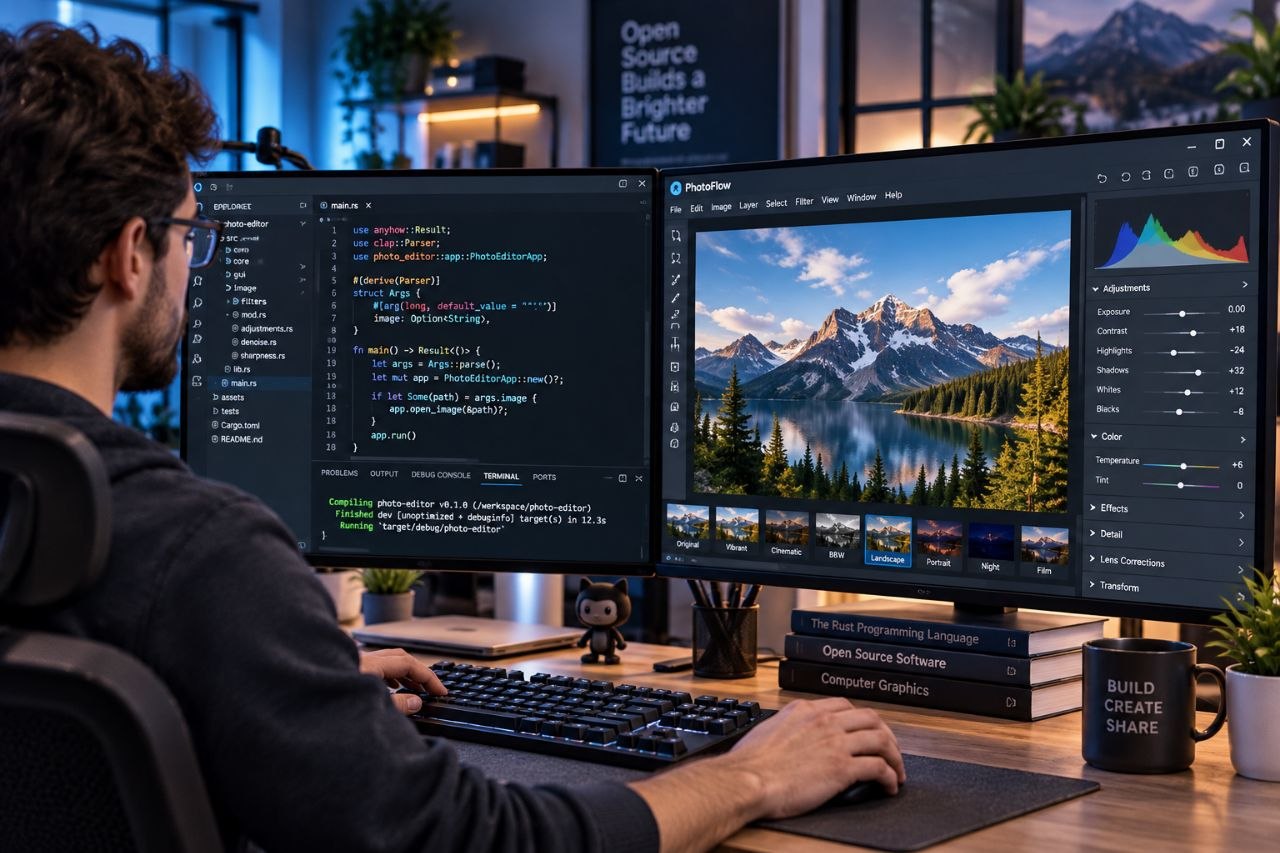
A software developer has shaken up the tech community by releasing a series of open source adobe clones built using artificial intelligence and the Rust programming language. Developer Brandon Thomas, a 15-year industry veteran, introduced an umbrella project called ArtCraft, which features seven applications designed to replicate Adobe’s flagship Creative Cloud suite without any subscription fees or cancellation hurdles.
The project includes PhotoCraft for Photoshop, VectorCraft for Illustrator, FilmCraft for Premiere Pro, LightCraft for Lightroom, EffectCraft for After Effects, DesignCraft for InDesign, and PrintCraft for Acrobat Pro. All seven programs have been published on GitHub under open-source MIT and Apache licenses.
Motivations and AI-Driven Development
According to reports, Thomas was initially inspired to build the suite out of frustration with Adobe’s subscription model, recurring monthly fees, and difficulties associated with cancelling subscriptions. His frustration coincided with recent regulatory scrutiny, including a $150 million settlement between Adobe and the U.S. government regarding subscription practices.
To build the suite, Thomas utilized Anthropic’s Claude Opus 5.5. Claiming to have single-handedly recreated the core functionality of professional design tools, Thomas boldly declared on social media that traditional software development models are facing massive disruption. The applications are billed as clean-room reimplementations to sidestep copyright concerns by avoiding direct reverse engineering of proprietary code.
Current Capabilities and Limitations
While the prospect of free alternatives to industry-standard software has generated immense excitement across developer forums and social media, testers and the creator’s own roadmap indicate that the tools are still in early alpha stages. PhotoCraft currently supports layers, masks, layer styles, smart objects, a brush engine, 34 tools, 27 blend modes, filters, and compatibility with Adobe’s proprietary .psd file format.
However, real-world utility remains limited compared to mature commercial software. PhotoCraft’s development roadmap estimates that the current build offers only about 25% to 35% of the functionality required for professional daily workflows. Early users testing the software have also reported performance quirks, missing advanced features like Content-Aware Fill, and bugs with keyboard shortcuts and basic editing functions.
Despite the current performance gaps, the release marks a significant milestone in generative AI coding capabilities. While it may not yet replace professional suites for daily studio work, ArtCraft represents a growing trend of developers leveraging AI agents to rapidly prototype complex software ecosystems.