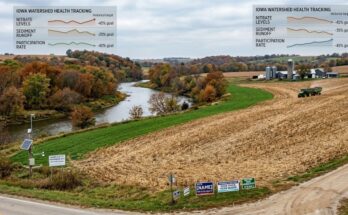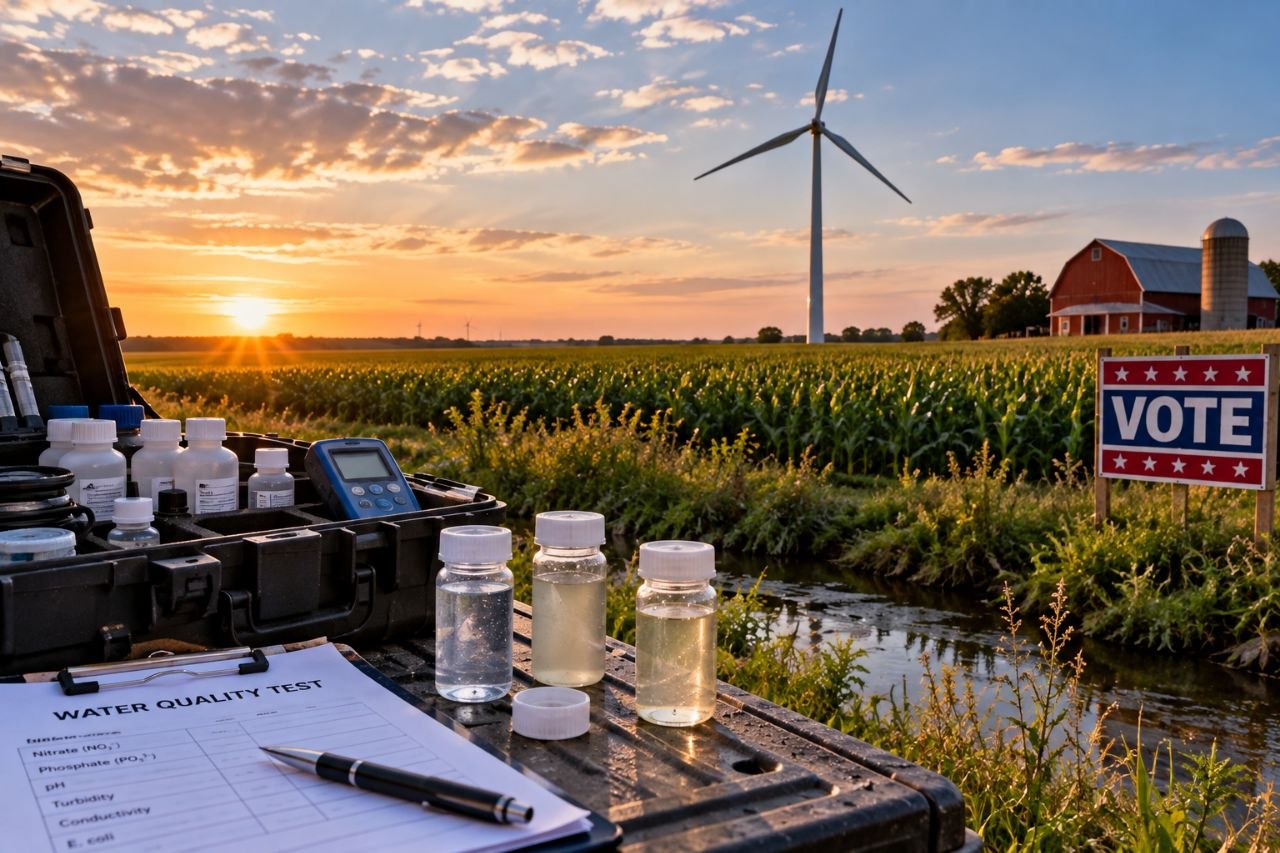
In an agricultural powerhouse where the farm economy has long dictated political norms, a broad health crisis is reshaping the political landscape. As Iowa heads toward the November midterm elections, rising cancer rates and severe water contamination have unexpectedly eclipsed traditional kitchen-table concerns like the cost of living, forcing candidates across party lines to address the issue.
A Growing Health Crisis in an Agricultural Hub
According to cancer rate monitoring from the National Institute on Minority Health and Health Disparities, Iowa holds the second-highest rate of cancer nationwide. Alongside Utah and West Virginia, it is one of only three states where the incidence of the disease is actively rising. Polling data underscores how deeply this resonates with residents; a Food & Water Action poll conducted earlier in the year found that 72 percent of Iowa voters are more concerned with the state’s rising cancer rates than with the general cost of living.
At the center of voter anxiety is the state’s water quality. Rivers such as the Raccoon and the Des Moines, which supply drinking water to central Iowa, consistently rank in the top 1 percent of rivers nationwide for nitrate concentration. Environmental groups and public health advocates argue that agricultural runoff, pesticides, and industrial farming practices are major drivers behind both the polluted waterways and the escalating health crisis.
Political Fallout and the Pressure on Big Ag
For decades, criticizing industrial agriculture was considered politically risky in a state heavily dependent on the farming sector. However, public demand for answers has altered the electoral calculus. Sarah Green, executive director of the nonpartisan Iowa Environmental Council, noted that while industrial agriculture and state leadership have historically been hesitant to discuss the connection, public concern has forced politicians from both parties to respond.
The issue has put traditional political alignments to the test. Candidates are increasingly pressured to outline official water quality and public health plans. Current State Auditor Rob Sand, a gubernatorial nominee, has drawn attention for advancing an official water quality platform. Meanwhile, other candidates have faced the complex task of balancing the demands of public health advocates and Make America Healthy Again (MAHA) movements with the massive economic influence exerted by agricultural and chemical conglomerates.
What Voters and Polls Indicate Ahead of November
Recent data confirms that environmental and health concerns will play a decisive role at the ballot box. A survey commissioned by the Johns Hopkins Center for a Livable Future revealed that a majority of Iowa voters rank water quality and the environment among their top five issues for the 2026 midterm election.
The issue carries particular weight among independent voters, who comprise a significant portion of Iowa’s electorate and are expected to sway competitive races. At the same time, public sentiment remains nuanced; polls show that many Iowans still view the agricultural industry favorably even as they demand stricter accountability regarding pollutants and public health outcomes. As the election approaches, candidates must navigate this delicate balance between supporting the state’s vital farm economy and answering the public’s urgent call for health and environmental reforms.