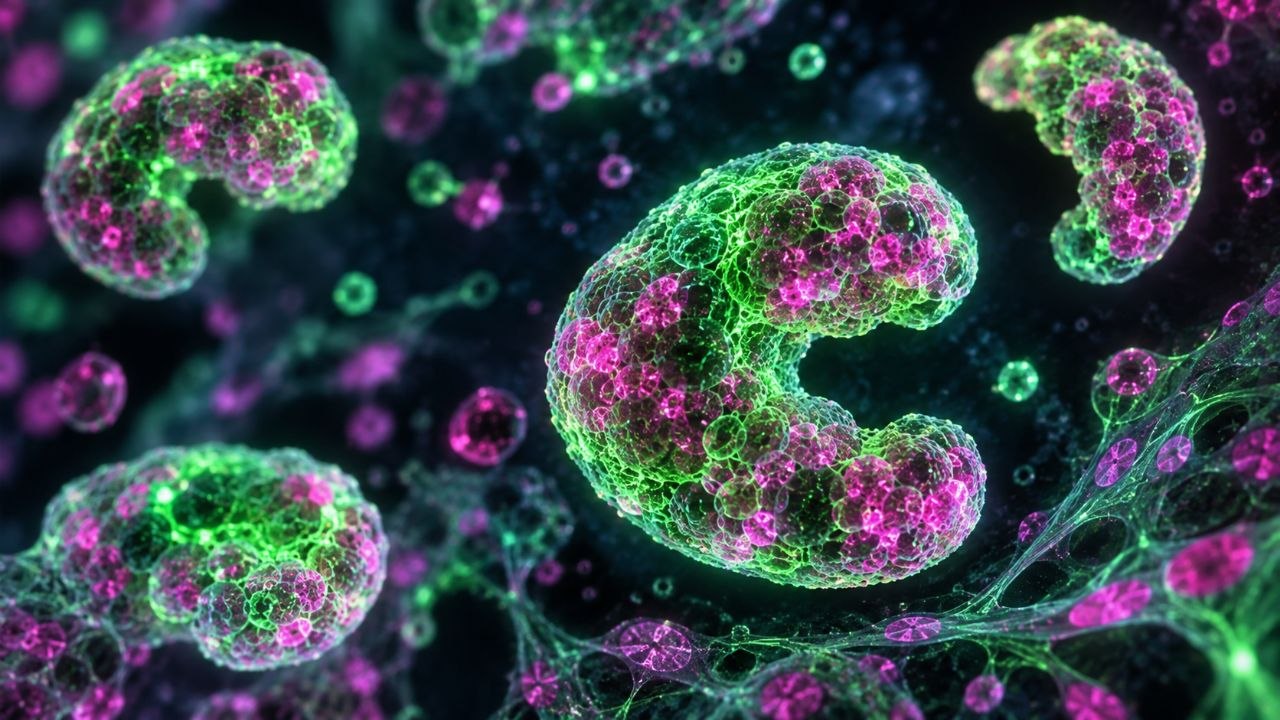
For generations, the boundary between life and death has been viewed as an absolute, definitive line. Traditional biology teaches a straightforward progression: organisms are born, they live, and eventually, they die. However, a growing body of scientific research is challenging this binary view by demonstrating that individual cells can take on entirely new functions and forms after the organism itself has perished.
In a comprehensive research review, biologists have detailed the existence of a mysterious “third state” that lies beyond the traditional boundaries of life and death. This emerging field highlights the remarkable plasticity of cellular systems, showing that under the right conditions, cells from dead organisms can reorganize and develop novel capabilities that were never programmed during the living organism’s life cycle.
Understanding Biobots and Cellular Plasticity
At the center of this scientific discovery are xenobots and anthrobots—tiny, multicellular robots powered by living cells that can perform specific tasks. Previous research has shown that when specific biological conditions are met, cells extracted from deceased organisms do not simply cease functioning. Instead, certain genes involved in stress response, immune function, and epigenetic regulation activate after death. This phenomenon has been observed across various species, including mice, zebrafish, and humans.
Unlike traditional cell lines or tumors that simply divide indefinitely in a petri dish, such as HeLa cells, these third-state structures actively reorganize into new multicellular life-forms. For example, xenobots constructed from frog embryo cells can navigate their environment and perform mechanical work. Meanwhile, scientists are exploring anthrobots derived from human tissue, which could eventually be used in targeted medical treatments.
Implications for Medicine and the Future of Biology
The discovery of this cellular third state opens up profound prospects for future medical treatments and drug delivery systems. Because anthrobots can potentially be sourced directly from an individual’s own living tissue, medical researchers believe they could be engineered to deliver targeted therapies without triggering an unwanted immune response.
Proposed future applications include deploying engineered micro-machines to clear arterial plaque in patients suffering from atherosclerosis or clearing excess mucus in individuals with cystic fibrosis. Fortunately, these third-state entities do not persist indefinitely. Research indicates that biobots typically perish after roughly four to six weeks, preventing them from becoming invasive or outliving their intended therapeutic purpose.
While scientists are still on the cusp of fully understanding the mechanisms driving this biological third state, the findings fundamentally alter our comprehension of cellular adaptability. By demonstrating that death may play a surprisingly active role in how cellular systems transform, this research paves the way for innovative medical breakthroughs while reshaping our understanding of life’s most fundamental boundaries.