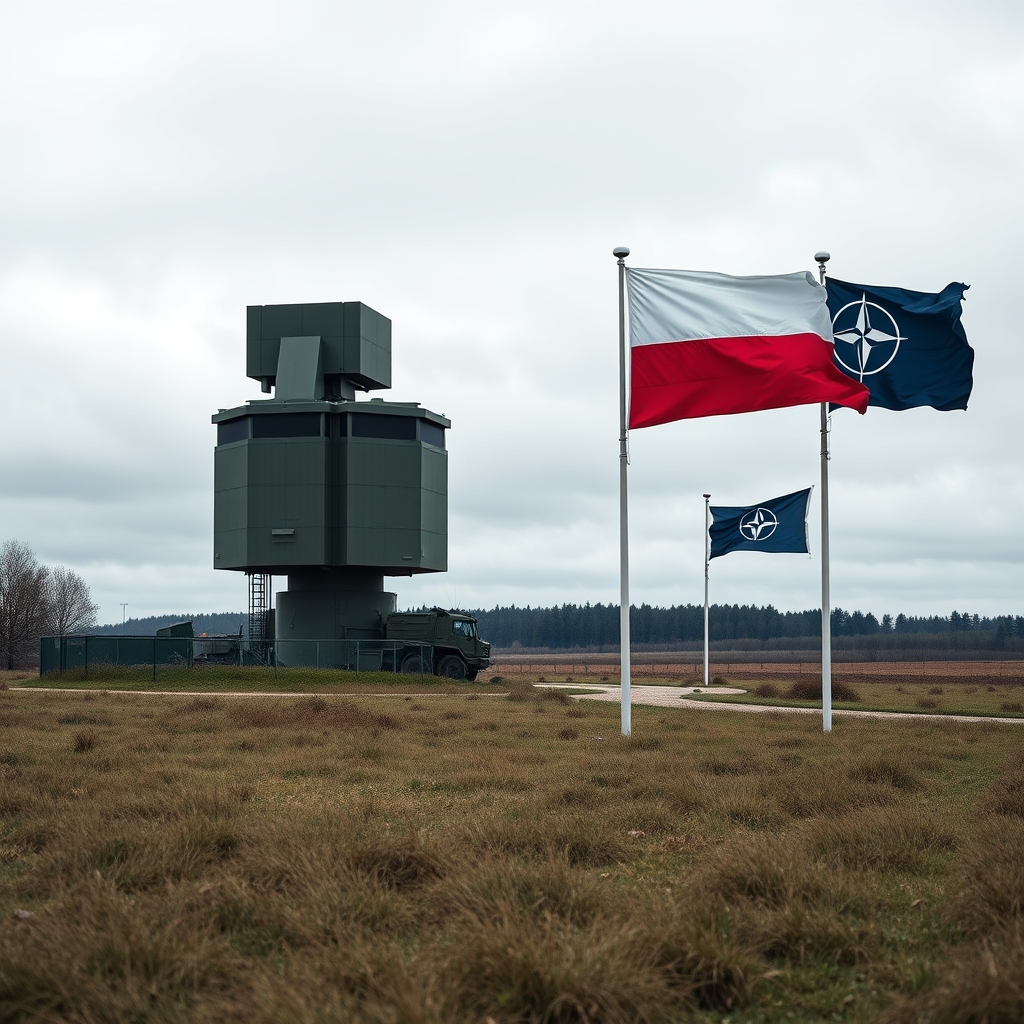
Poland has officially accused Russia of an “intentional provocation” after a Russian cruise missile breached Polish airspace on Friday, November 20, 2026. The incident occurred during one of the largest Russian aerial campaigns against Ukraine since the conflict began in 2022, prompting an immediate condemnation from NATO leadership.
Details of the Russian Missile Breach
The Polish Defense Ministry reported that a Kh-101 cruise missile entered Polish territory, eventually crashing in a rural area near Nowy Lipowiec, located approximately 50 kilometers (31 miles) from the Ukrainian border. While the impact caused no reported casualties or significant damage, the violation has heightened tensions throughout the region.
Polish authorities activated air defense systems early Friday morning following reports of multiple objects entering the nation’s airspace. Investigations are currently underway to recover debris and confirm the flight path of the projectile. Deputy Polish Prime Minister and Defense Minister Władysław Kosiniak-Kamysz characterized the timing and location of the incursion as non-accidental, noting that it occurred while several nations were conducting large-scale military maneuvers in the vicinity.
Military Exercises and NATO Response
At the time of the violation, 11 nations—part of the Western “Coalition of the Willing”—were engaged in a two-week military exercise known as Koalicja 2026. Based in southeastern Poland, these exercises were designed to prepare forces for potential post-war stabilization and reconstruction efforts within Ukraine.
NATO Secretary-General Mark Rutte issued a strong statement following the event, labeling the incident a “grave violation” of Polish airspace. In a social media update, Rutte emphasized that the alliance remains in full solidarity with Poland and is committed to strengthening regional deterrence and defense capabilities. He is expected to visit Poland over the weekend to consult with national leaders.
International Implications and Investigation
The incursion has drawn renewed focus on the security of NATO’s eastern flank. U.S. Air Force Gen. Alexus Grynkewich, NATO’s Supreme Allied Commander for Europe, is reportedly in close contact with Polish defense officials to monitor the ongoing investigation. While Russia’s Defense Ministry acknowledged carrying out a mass strike on Ukrainian infrastructure—claiming to target missile and drone assembly facilities—Moscow has not commented on the specific reports of its missiles violating Polish territory.
Poland and neighboring Baltic nations have seen recurring security challenges due to their proximity to Russia and Belarus, often dealing with stray drones or missile remnants. However, the explicit designation of this latest incident as a “provocation” marks a significant diplomatic escalation. Polish officials have indicated they will be requesting additional support from NATO as the investigation into the crash site continues.