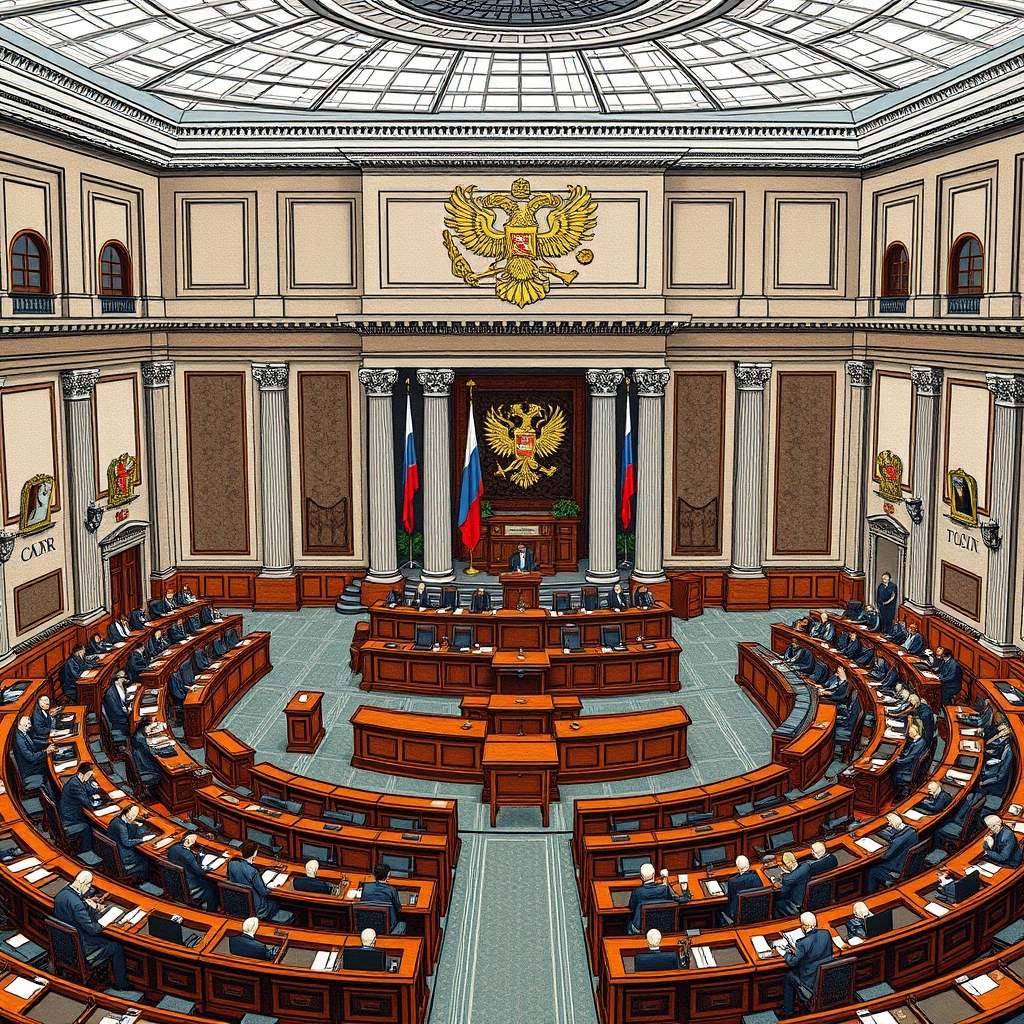
Russia’s lower house of parliament, the State Duma, has officially approved a new federal budget for 2027–2029 that significantly prioritizes military expenditures. The legislative move marks a substantial escalation in government spending, with authorities opting to bolster the defense sector while simultaneously introducing tax increases to manage the financial strain of the ongoing conflict in Ukraine.
Details of the Russia 2027 Defense Budget
According to reports from the Duma’s official television channel and parliamentary records, the approved budget allocates over 50 trillion rubles, approximately $609 billion, to defense across the three-year period. For the year 2027 specifically, the state has earmarked 17.15 trillion rubles—roughly $208.8 billion—for national defense. This figure represents an increase of approximately one-third compared to the 12.93 trillion rubles allocated for 2026 in the previous budget plan.
When compared to earlier fiscal forecasts, the current budget plan shows a marked upward trajectory. The planned expenditure for 2027 is notably higher than the 13.6 trillion rubles originally projected for the same year in previous budget cycles. In total, the defense funding for the 2027–2029 period exceeds the previous three-year plan by roughly 10.5 trillion rubles, or $127.8 billion.
Economic Consequences and Tax Adjustments
To support this high level of military spending, the Russian government has adopted a series of tax increases. The budgetary strategy aims to extract greater revenue from both corporate and private sectors. Key measures include new levies on mining companies, with windfall profits taxes ranging from 20% to 30% targeting firms that have profited from rising global prices for gold, nickel, and iron ore.
The financial pressure is expected to impact broader economic policy. Reports indicate that the government is tightening fiscal conditions, which may lead to reduced funding for certain civilian programs. Critics and analysts have pointed out that the current economic structure is increasingly skewing toward war-related production, creating potential long-term challenges for healthcare and other domestic social services.
Political Context and Official Response
Despite the economic trade-offs, members of the ruling United Russia party have characterized the legislation as a necessary “victory budget.” Proponents argue that the spending is essential not only for national defense but also for providing support to veterans and their families, alongside broader, albeit limited, state social programs.
As the conflict in Ukraine approaches its fifth year, the Russian government is signaling a continued commitment to high-intensity military production. The reliance on increased debt, higher taxes, and a shift in budgetary priorities reflects the deepening economic battle that has become a central component of the war of attrition between Russia and Ukraine. As of late 2026, the legislative path forward confirms that Moscow intends to maintain its current military trajectory throughout the remainder of the decade.