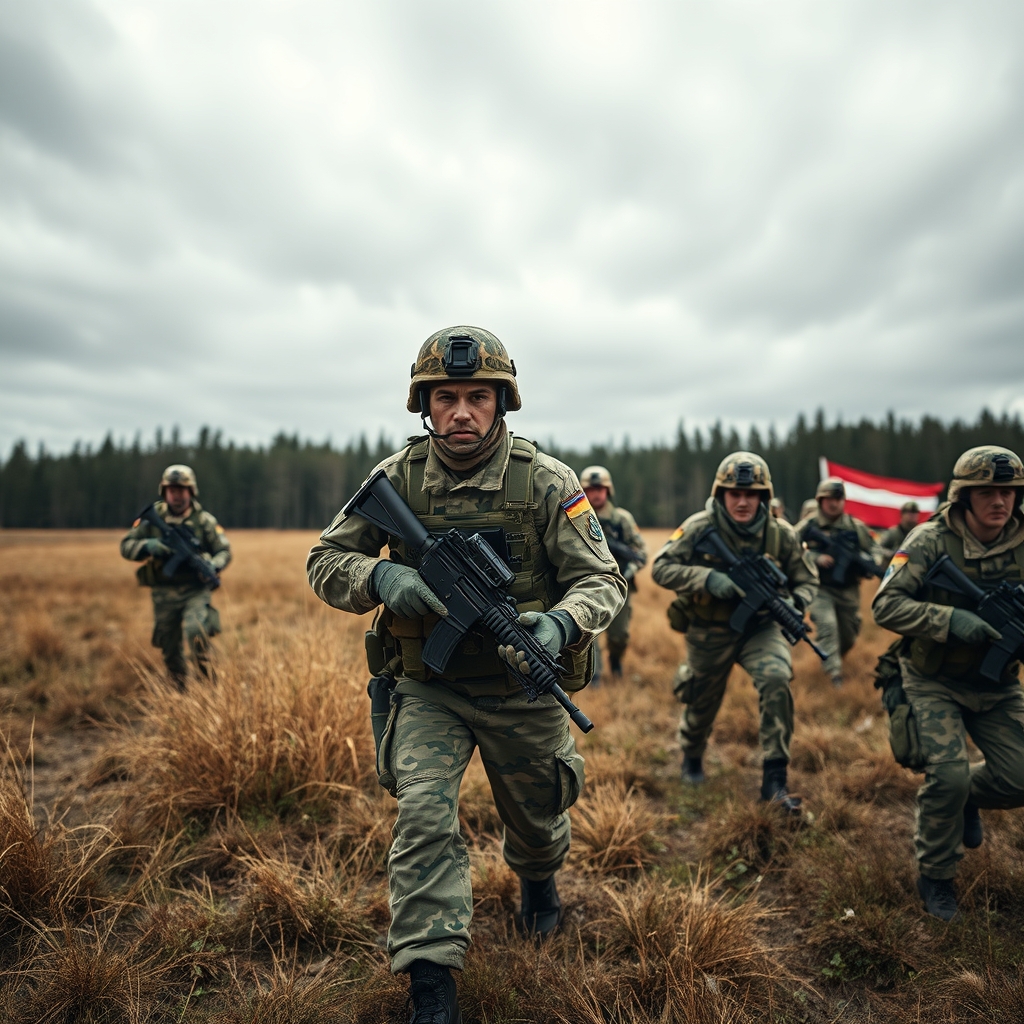
Polish authorities have characterized the landing of Russian projectiles on their territory as an “intentional provocation” following an overnight air assault that crossed into the NATO member state. On November 20, 2026, multiple objects, including missiles and a jet-powered drone, entered Polish airspace during a large-scale Russian attack on neighboring Ukraine.
Details of the Incursion
According to Polish officials, the incident involved three distinct objects. Authorities confirmed that one Kh-101 missile impacted the eastern village of Nowy Lipowiec. Reports indicate that a second missile struck near Rudnik nad Sanem, while a jet-powered drone fell in the area of Molodycz. All three locations are situated in the country’s southeastern region, near the Ukrainian border.
Prime Minister Donald Tusk addressed the nation in a televised press conference, stating that while the incursions caused no casualties and minimal destruction, the timing and nature of the event suggest a deliberate act. “We are dealing with an intentional provocation,” Tusk said, noting that the assessment is shared by Poland’s foreign partners and NATO intelligence.
Timing and Military Context
The projectiles entered Polish airspace as Moscow launched a series of high-interval missile strikes against Ukraine. Officials in Warsaw highlighted that the incursion coincided with the ongoing Exercise Koalicja, an unprecedented two-week military drill taking place in southeastern Poland.
The exercise, which began on November 9, involves between 5,000 and 6,000 personnel from several nations, including Belgium, France, Estonia, Spain, the Netherlands, Lithuania, Germany, Sweden, and the United Kingdom. Defense Minister Wladyslaw Kosiniak-Kamysz confirmed the deployment of these international forces, emphasizing the strategic importance of the training in preparing for potential postwar stabilization missions in Ukraine.
Strategic Implications for NATO
Despite the severity of the claim, Poland has not invoked Article 4 of the North Atlantic Treaty, which allows for consultations among allies when a member state feels its territorial integrity or security is threatened. While NATO aircraft were scrambled to monitor the Russian missiles and drones, the proximity of the impact sites to the active conflict zone in Ukraine restricted the ability of air defenses to engage the targets safely.
Analysts suggest that the incident highlights a growing tension regarding the threshold for collective action. By failing to trigger formal alliance-wide consultations, some observers argue the incident underscores the difficulty NATO faces in responding to “gray-zone” provocations that do not result in mass casualties or significant destruction but clearly violate national sovereignty. Several European defense ministers are expected to arrive in Poland over the coming weekend to discuss the security implications of the incident further.