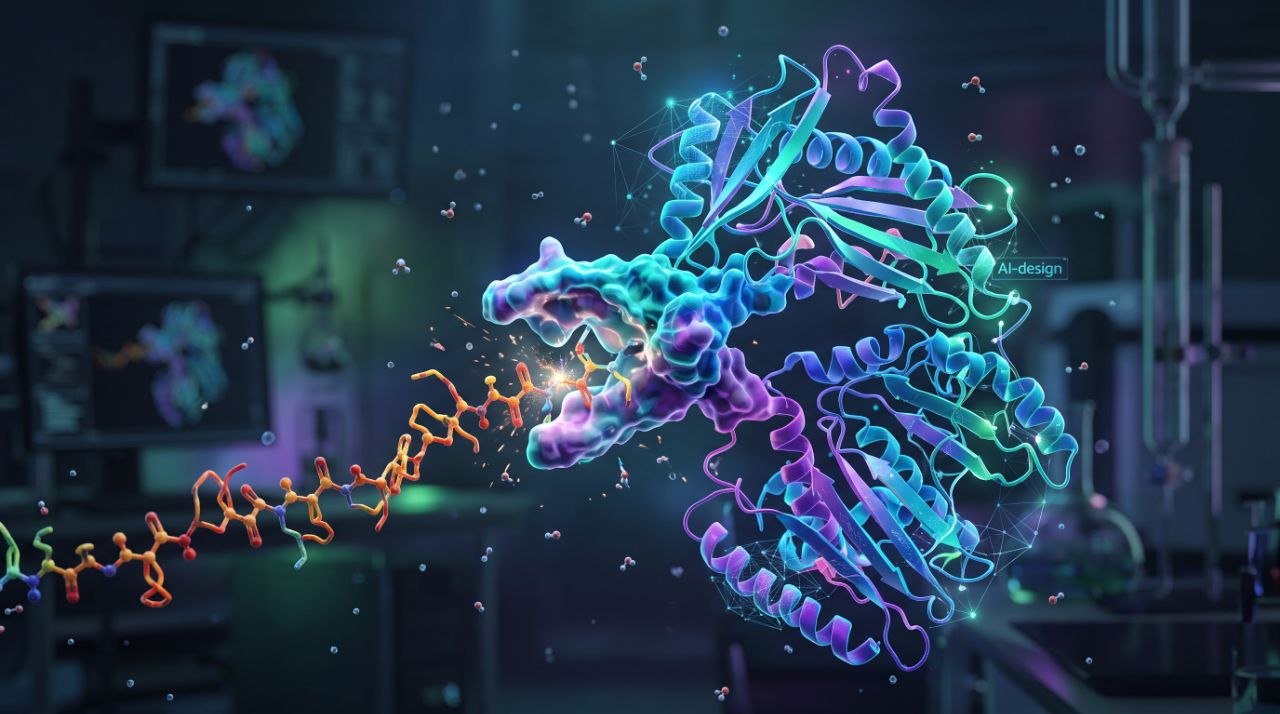
Researchers have successfully used artificial intelligence to build functional molecular scissors from scratch, marking a major milestone in computational biology and de novo enzyme design. Led by Nobel laureate David Baker at the University of Washington’s Institute for Protein Design, scientists developed custom enzymes capable of recognizing and precisely cutting targeted protein sequences.
While previous AI tools successfully generated new protein shapes and structures, creating functional proteases presented a much greater challenge. An effective protease must not only fold into a stable shape but also selectively recognize a chosen protein sequence and cleave it efficiently. The breakthrough findings were detailed in two separate papers published in the journal Nature.
Breakthrough in Cysteine and Zinc Proteases
To overcome longstanding biochemical hurdles, the research team combined several advanced artificial intelligence tools to engineer both cysteine and zinc proteases. Out of 69 cysteine protease candidates tested, 13 successfully cut their intended targets. The zinc protease designs performed even stronger, with 36% of 135 candidates successfully cutting their matching peptide targets.
Further refinement using AI tools significantly boosted performance. Researchers increased the cutting speed of the top zinc protease by 30 times and successfully designed a cysteine protease that cleaved its target at precisely the intended site. Work involving cysteine proteases achieved a 19% overall success rate in targeting specific bonds, operating up to 30 million times faster than uncatalyzed reactions.
Potential Applications in Medicine and Disease Treatment
The creation of tailor-made molecular scissors opens promising paths toward new medical therapies. According to the research team, these computationally designed enzymes can function effectively inside living cells. Investigators have already developed proteases designed to attack proteins associated with neurodegenerative disorders and are actively expanding their focus toward targets linked to malaria, cancer, and chronic diseases. Additional long-term applications could include neutralizing bacterial toxins and defanging viruses.
Designing proteases entirely from scratch has long remained a difficult objective in structural biology. By demonstrating that deep-learning-based design methods can produce working enzymes matching their computational blueprints, the University of Washington team has moved de_novo enzyme design well beyond basic model reactions, paving the way for advanced targeted treatments.