Researchers have achieved a major milestone in computational biology by using artificial intelligence to design working molecular scissors from scratch. Published in the journal Nature, teams at the University of Washington’s Institute for Protein Design unveiled newly engineered enzymes capable of slicing through specific disease-associated proteins with unprecedented precision.
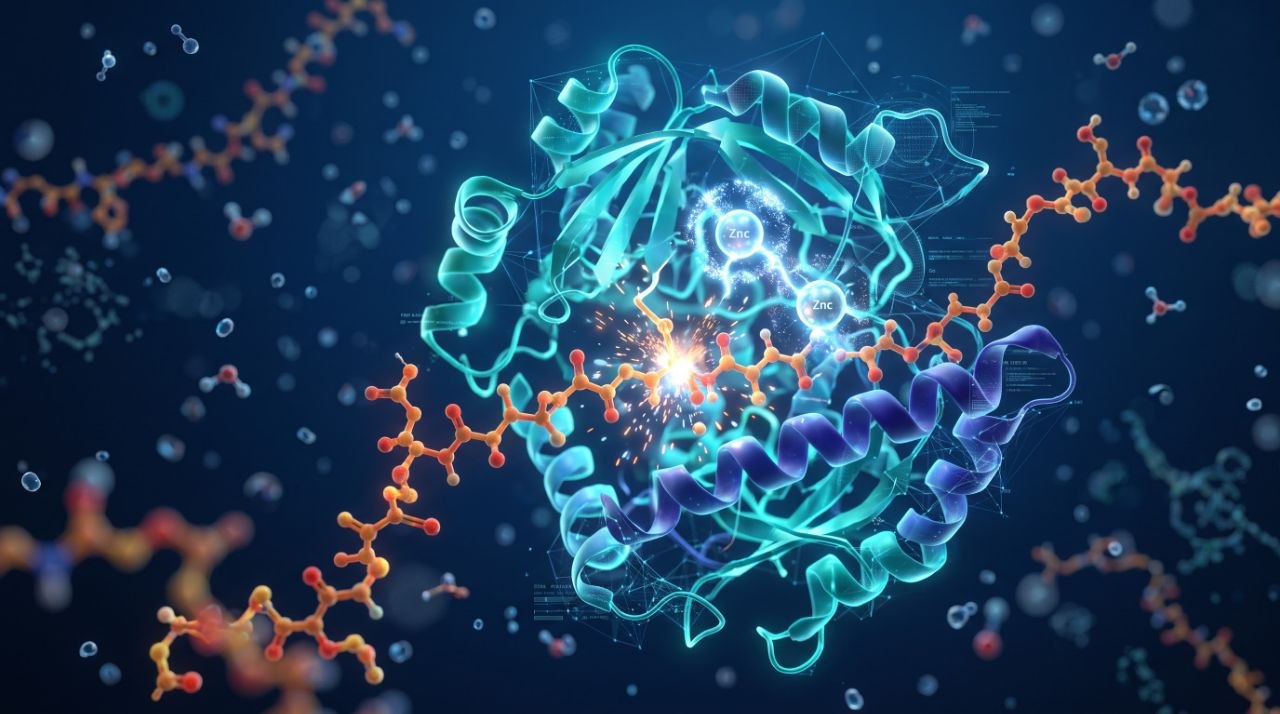
The breakthrough centers on the de novo design of metalloproteases—enzymes that utilize a bound metal ion rather than an amino acid as their cutting blade. Historically, engineering functional proteases has remained a major challenge because natural protein scissors require near-atomic precision and subtle flexibility to properly grip and cleave their target sequences.
Breakthrough in Computational Protein Design
Led by researchers including co-first authors Anqi Chen and Kejia Wu, the scientific teams employed advanced deep-learning methods, including RFdiffusion, to construct custom protein structures. Out of 135 zinc-dependent metalloprotease designs tested in the study, 36% successfully catalyzed the cleavage of their targeted peptide substrates.
According to the published findings, the top-performing initial design accelerated peptide-bond hydrolysis by more than 100 million times relative to the uncatalyzed reaction. Subsequent AI refinements further boosted the cutting speed of the leading zinc protease and optimized cysteine protease candidates designed in a companion study.
Targeting Disease-Linked Proteins
The newly engineered AI-designed metalloproteases demonstrated the ability to precisely cut sequences found in major human disease-linked proteins, including amyloid-beta—which is implicated in Alzheimer’s disease—as well as TDP-43 and serum amyloid A. By successfully targeting these specific molecular sequences, the discovery opens up promising new pathways for developing targeted therapies and protease-activatable prodrugs.
The successful transition from computational blueprints to active laboratory enzymes demonstrates that de novo enzyme design has advanced well beyond simple model reactions. As researchers continue refining these molecular tools, the technology offers powerful new ways to probe living cells and target pathological proteins at their root.