A groundbreaking study published in the scientific journal Nature has uncovered a potential new paradigm for understanding systemic lupus erythematosus (SLE), pointing to mutated white blood cells as a primary driver of the autoimmune disease. The research suggests that rather than a simple loss of immune tolerance, the Escalating immune activation characteristic of lupus may be provoked by abnormal cellular components that the immune system is actively trying to eliminate.
The collaborative research paper, titled “T and B cells recognize splicing-derived neutrophil neoantigens in lupus,” was co-authored by scientists including researchers from UW Medicine and the La Jolla Institute for Immunology in San Diego. The findings shed light on long-standing mysteries surrounding how and why the body turns against itself in autoimmune conditions.
The Role of mRNA Splicing and Neutrophils
According to the study, something goes wrong during the mRNA splicing process in certain patients, resulting in altered amino acid sequences. Crucially, these faulty messenger RNA strands manage to escape the cellular mechanisms normally responsible for destroying nonsense sequences. As a result, they produce altered proteins known as neoantigens.
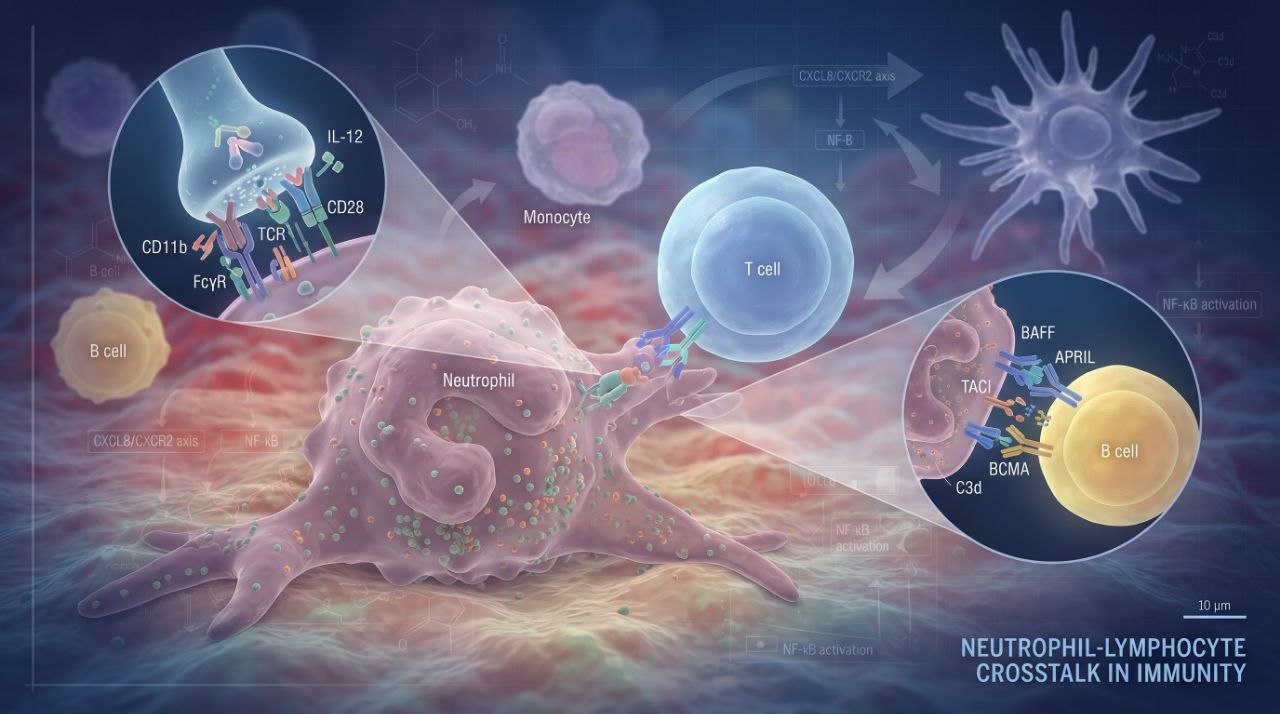
The researchers observed that in lupus patients, neutrophils—a type of white blood cell that acts as a frontline defense—frequently contained aberrantly spliced gene transcripts. Notably, this phenomenon did not appear in patients with rheumatoid arthritis or in healthy individuals without either condition. In a striking finding, testing revealed that 33 out of 34 lupus patients carried neutrophils with these RNA splicing mutations.
Immunopeptidomics experiments confirmed that these neutrophils display neoantigen peptides on their surface via class I MHC molecules. The body’s T cells and B cells then recognize these novel pieces as foreign or problematic, generating antibodies and mounting a response against them.
A New Model for Disease Progression
This discovery introduces a novel model for lupus pathogenesis. Scientists propose that the generation of neoantigens acts as the driving force behind escalating immune activation. In this scenario, the immune system is functioning precisely as programmed—attempting to clear what it perceives as foreign threats.
Furthermore, researchers surmise that the production of these neoantigens, along with the corresponding immune response, can fluctuate over time. This cyclical production and response could help explain the characteristic waxing and waning of lupus symptoms that patients experience throughout the course of their disease. While the study opens up exciting new pathways for future therapeutic strategies and a deeper comprehension of autoimmune disorders, ongoing research will be necessary to translate these findings into clinical treatments.