A groundbreaking new study reveals that the developing human brain carries out a sophisticated genetic quality control process around the time of birth, selectively eliminating neurons that contain widespread DNA abnormalities. Published in the journal Nature on October 28, 2026, the research provides unprecedented insight into how the human cortex establishes healthy neural networks.
Uncovering Genetic Quality Control in the Developing Brain
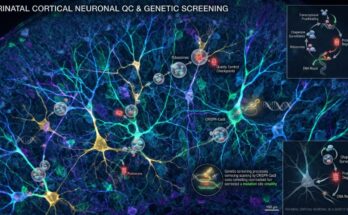
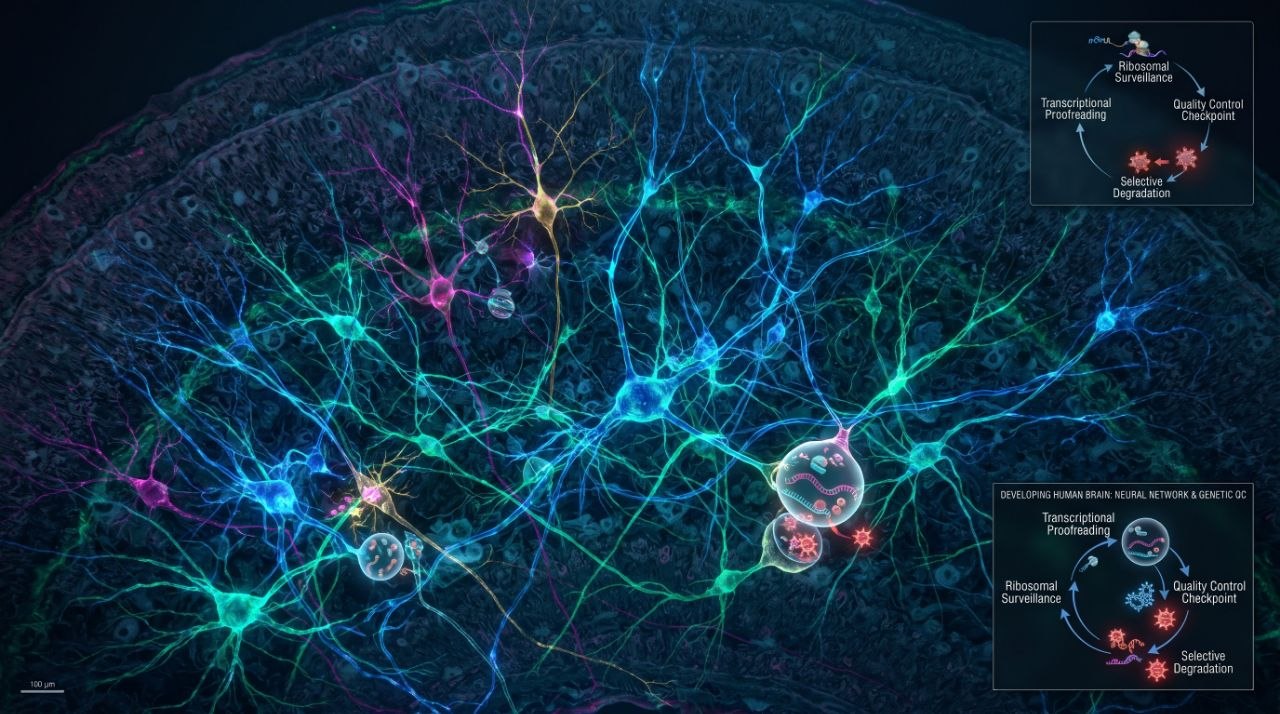
Led by researchers at Boston Children’s Hospital and Harvard Medical School, the study examined copy number variants—such as DNA deletions or duplications—within the prenatal and postnatal human cortex. The findings demonstrate that neurons with widespread genomic alterations are surprisingly common before birth, averaging roughly 25.9% in the prenatal human cortex. However, that figure drops dramatically to an average of 6.2% following birth.
Co-senior author Peter Park, professor of biomedical informatics in the Blavatnik Institute at Harvard Medical School, noted that between 13% and 46% of neurons in the developing brain harbor these copy number variants. Despite this high prenatal frequency, the research shows a robust biological mechanism selectively culls these flawed cells around the time of birth.
Scientists attribute this selective elimination to the genomic alterations disrupting the neurons’ ability to properly form synapses. Because these abnormal cells struggle to integrate into functional neural circuits, they are systematically weeded out during a critical developmental window timed roughly parallel to periods of programmed cell death.
Implications for Neurodevelopmental and Neurodegenerative Disorders
The discovery opens up entirely new avenues of research into various neurological and psychiatric conditions where neural development goes awry. Copy number variants are known to impact brain function and are frequently implicated in neuropsychiatric and neurodevelopmental disorders, including autism, schizophrenia, epilepsy, and intellectual disability.
Co-senior author Christopher Walsh and his team are now investigating whether the perinatal elimination process functions differently in the developing brains of individuals with autism and other conditions. Researchers are also exploring whether abnormalities in this neural pruning mechanism contribute to neuron loss seen in neurodegenerative conditions like Alzheimer’s disease.
While the primary purge of neurons with widespread copy number variants occurs perinatally, the study also tracked long-term patterns. Researchers observed that neurons with smaller copy number burdens decline much more slowly throughout postnatal life. Pooling their data with six earlier single-cell whole-genome amplification studies, the team estimated that a slow, lifelong trickle removes approximately 13% of neurons over a span of 60 years, stabilizing at roughly 4.8% of neurons with widespread variants in adults over age 60.
By establishing how a healthy brain regulates cellular and genetic integrity during its most formative stage, the study offers a foundational framework for understanding how developmental errors may pave the way for neurological disease.