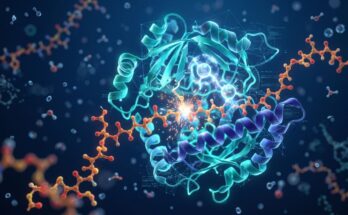
Researchers at UW Medicine’s Institute for Protein Design (IPD) have successfully utilized artificial intelligence to build custom proteins that function as AI designed molecular scissors. These engineered enzymes are capable of recognizing and precisely chopping up specific protein targets associated with debilitating neurodegenerative conditions, including Alzheimer’s disease and amyotrophic lateral sclerosis (ALS).
The breakthrough research, detailed in two studies published in the journal Nature on October 14, represents a major milestone in computational biology and therapeutic design. Rather than modifying existing biological molecules, the scientific teams leveraged advanced computational methods to design functional enzymes from scratch.
Engineering Custom Proteases With AI
Proteases are natural enzymes that break down proteins by cleaving peptide bonds, but engineering them to target specific pathological proteins has historically been a formidable challenge. In the new studies, led by researchers including Anqi Chen, Kejia Wu, and Choi and his colleagues at the University of Washington, scientists specified target sequences and tasked artificial intelligence with generating custom enzymes to slice them.
The teams pursued two distinct strategies for the cutting mechanism. In one approach, researchers used an activated amino acid called cysteine as the blade, achieving a 19% success rate in cutting intended targets while operating up to 30 million times faster than uncatalyzed reactions. In a separate study, scientists computationally designed metalloproteases that utilize a bound metal ion as the cutting blade. Approximately 36% of these zinc-based designs showed active, precise cutting, operating up to 100 million times faster than uncatalyzed reactions.
Laboratory tests demonstrated that these engineered enzymes successfully cleaved purified proteins, sequences drawn from neurodegenerative disease markers, and in certain evaluations, functioned inside living human cells cultured in the laboratory.
Targeting Neurodegenerative Diseases and Beyond
The potential medical implications of these AI-designed enzymes are substantial. Among their successful tests, custom proteases chopped targeted fragments of amyloid-beta, a protein heavily implicated in the development of Alzheimer’s disease. Other versions successfully cleaved full-length TDP-43, an abnormal protein buildup associated with ALS—the most common form of motor neuron disease—and specific types of dementia. Additionally, researchers created variants that targeted serum amyloid A, which is linked to severe organ damage in systemic amyloidosis.
While the initial proof-of-concept tests show immense therapeutic promise, the newly engineered enzymes have not yet undergone human clinical trials. Following these successful laboratory demonstrations, the research teams are actively working to expand their methodology to target proteins associated with malaria, chronic diseases, cancer, and the neutralization of viruses or bacterial toxins.
Experts believe that coupling artificial intelligence with structural biology will dramatically accelerate the discovery pipeline in biotechnology, opening unprecedented pathways for targeted medicine and industrial chemistry once rigorous safety and clinical evaluations are underway.