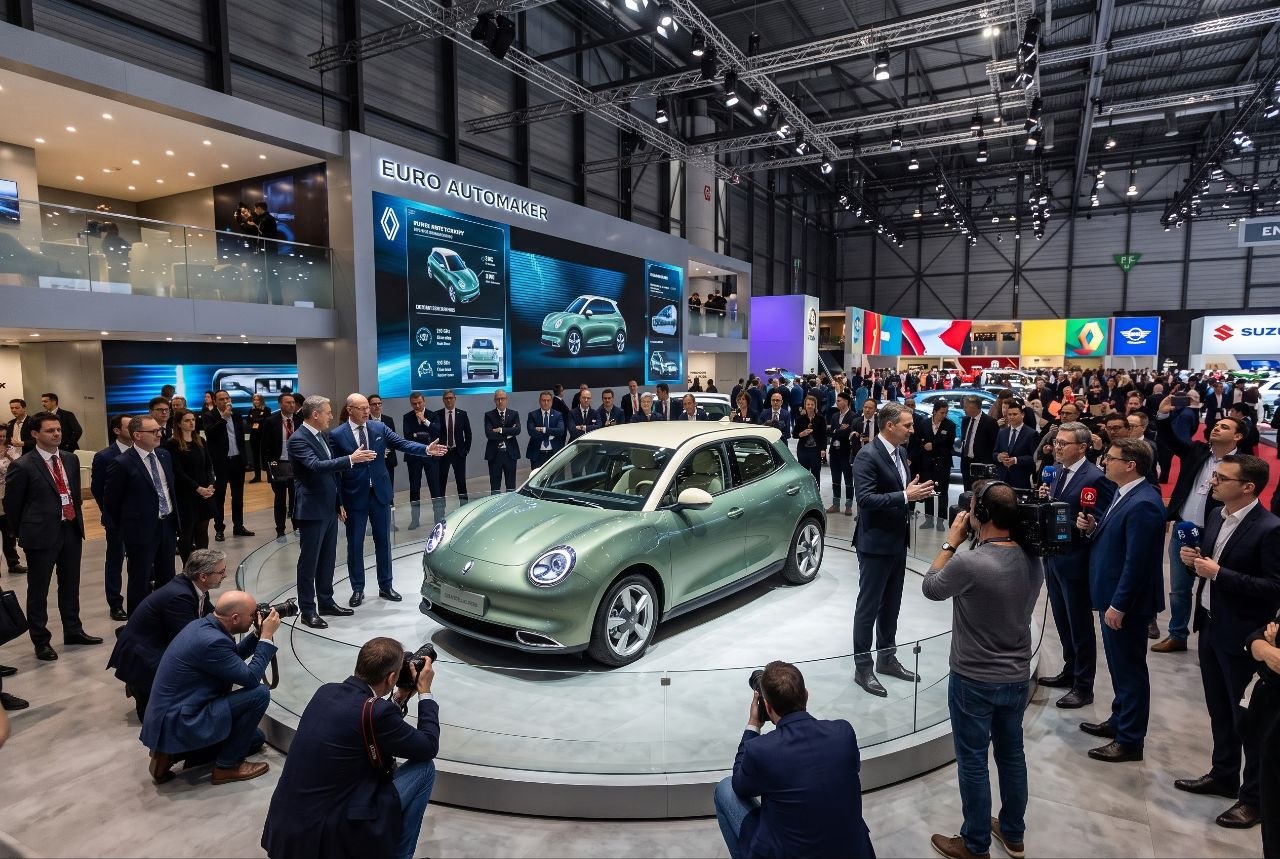
Major European automakers are turning to nostalgic heritage designs and strategic overhauls to combat fierce competition from affordable Chinese electric vehicles. At the Paris Auto Show, industry bulwarks including Volkswagen, Stellantis, and Renault showcased how they are rethinking their approaches to capture budget-conscious buyers and revive consumer enthusiasm.
Reviving Classics to Counter Price Pressure
To stand out in an increasingly crowded market, Stellantis unveiled a modern electric version of Citroën’s iconic 2CV, a compact car originally produced from 1948 to 1990. The company hopes the new electric 2CV will attract die-hard fans of the classic vehicle while drawing in a broader audience searching for affordable battery-powered options.
Similarly, Volkswagen introduced an electric Polo that draws substantial inspiration from the 1980s golden era of the Golf. Industry experts note that these retro styling strategies are heavily concentrated in the small, affordable electric vehicle segment, which is precisely where pricing pressure from Chinese brands is expected to be strongest.
Renault Group design chief Laurens van den Acker explained that the heritage-focused strategy is designed to differentiate legacy European brands from newer competitors and evoke a strong emotional connection with buyers.
Strategic Overhauls and Regulatory Calls
Beyond vehicle design, European automotive leaders are adapting their business strategies and calling for regulatory support. Both Volkswagen and Stellantis used recent industry showcases to signal confidence in their electric vehicle pipelines by adopting key lessons from Chinese rivals and partners.
At the same time, top executives have urged European policymakers to provide stable long-term rules and greater flexibility. Renault CEO François Provost warned that an accumulation of new regulations risks hindering European competitiveness and production. He advocated for a stable regulatory framework alongside constructive dialogue with China to prevent escalating trade tensions. Similarly, Volkswagen CEO Oliver Blume called for enhanced support for electric mobility and measures that foster industrial value creation across Europe.
Navigating a Shifting Global Landscape
The strategic shifts come as Chinese automakers continue expanding their footprint in Europe through competitive pricing, advanced in-house technology, and high-profile joint ventures. Established European groups are adjusting their focus toward profitability, strong residual values, and localized collaborations to maintain their market standing.
As competition intensifies, European automotive giants face a critical balancing act: combining their storied manufacturing heritage with agile, cost-effective electric vehicle production to secure their future in a rapidly evolving global market.