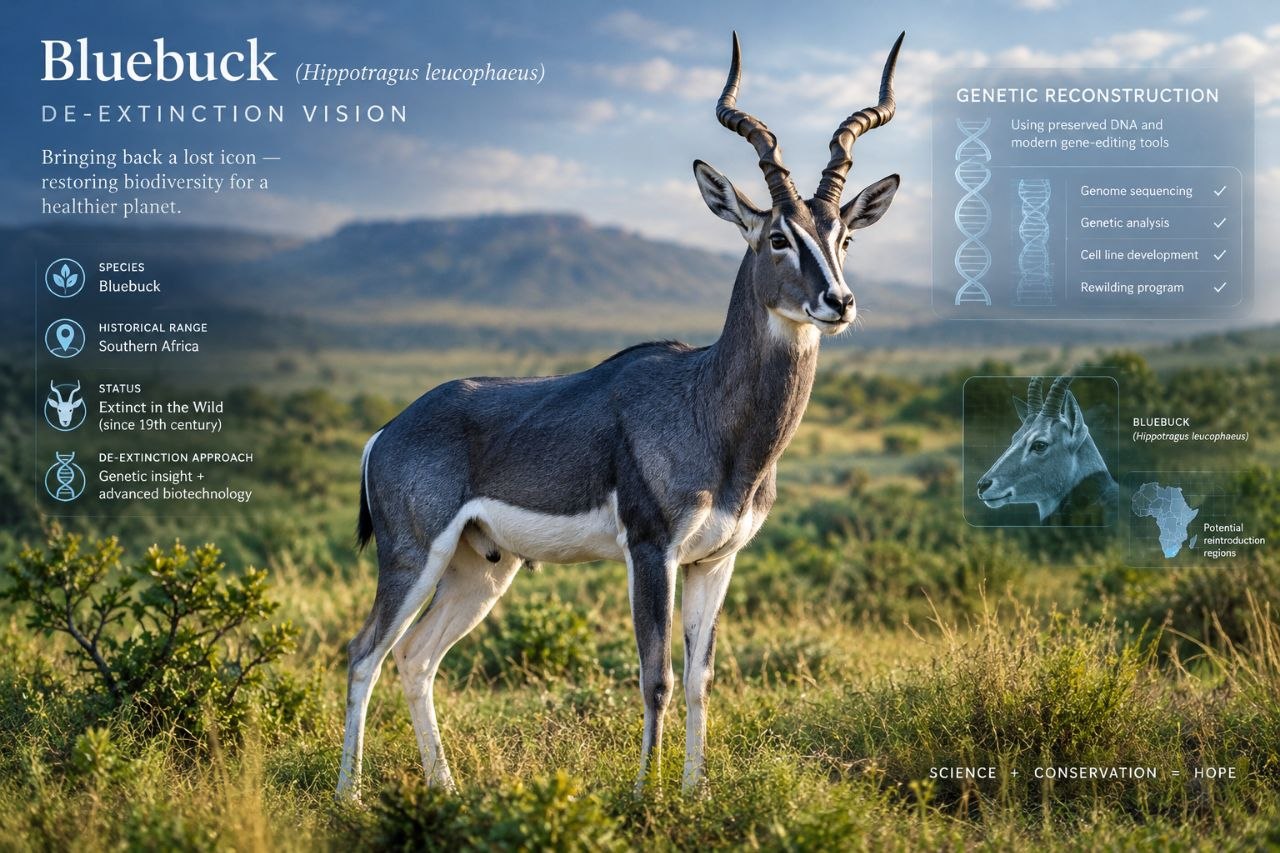
Dallas-based biotech firm Colossal Biosciences has revealed its latest target in the growing field of de-extinction: the bluebuck, a majestic African antelope that vanished approximately 200 years ago. Announced on April 30, 2026, the project marks the company’s first foray onto the African continent and adds a sixth species to its high-profile restoration portfolio.
Targeting the Bluebuck for De-Extinction
Formally described as a distinct species in 1766, the silvery-blue antelope of South Africa’s southwestern Cape was hunted to extinction by European colonists around 1800, marking what historians consider the first modern African mammal extinction. Colossal CEO Ben Lamm stated that the company has obtained bluebuck DNA, mapped it, and compared it to the animal’s closest living relatives. The project is now in the final and most complex phase of genomic editing.
Chief science officer Beth Shapiro noted that the bluebuck represents a clear example of an extinction caused by human activity that modern technology can potentially reverse. To achieve this, the company is using the roan antelope as a cellular surrogate, editing roan DNA to bring it closer to the bluebuck’s appearance and traits. Additionally, Colossal’s team has produced the world’s first induced pluripotent stem cells (iPSCs) from roan antelopes and completed successful ovum pickup procedures in both roan and scimitar-horned oryx species.
Broader Conservation Goals and Portfolio Updates
While the bluebuck is the newest addition, Colossal Biosciences continues to advance its other ambitious genetic rescue initiatives. The company’s highest-profile endeavor remains its woolly mammoth project, which CEO Ben Lamm confirmed is still on track to deliver its first birth by 2028. Other ongoing de-extinction and conservation undertakings include efforts focused on the dodo, the Tasmanian tiger (thylacine), the dire wolf, and the South Island giant moa.
Company executives emphasize that these headline-grabbing de-extinction projects are designed to generate scalable tools and technologies for contemporary conservation. According to chief animal officer Matt James, specialized ovum pickup protocols and reproductive technologies developed through these programs are intended to directly benefit the 29 antelope species currently listed as endangered around the world.
Looking Ahead
Colossal maintains that its scientific roadmap relies on responsible partnerships with governments, ecologists, indigenous communities, and scientists. As the company navigates the intricate genomic editing phase for the bluebuck and moves closer to milestones for its woolly mammoth initiative, researchers continue to refine the biotech protocols that may eventually shape the future of global wildlife preservation.