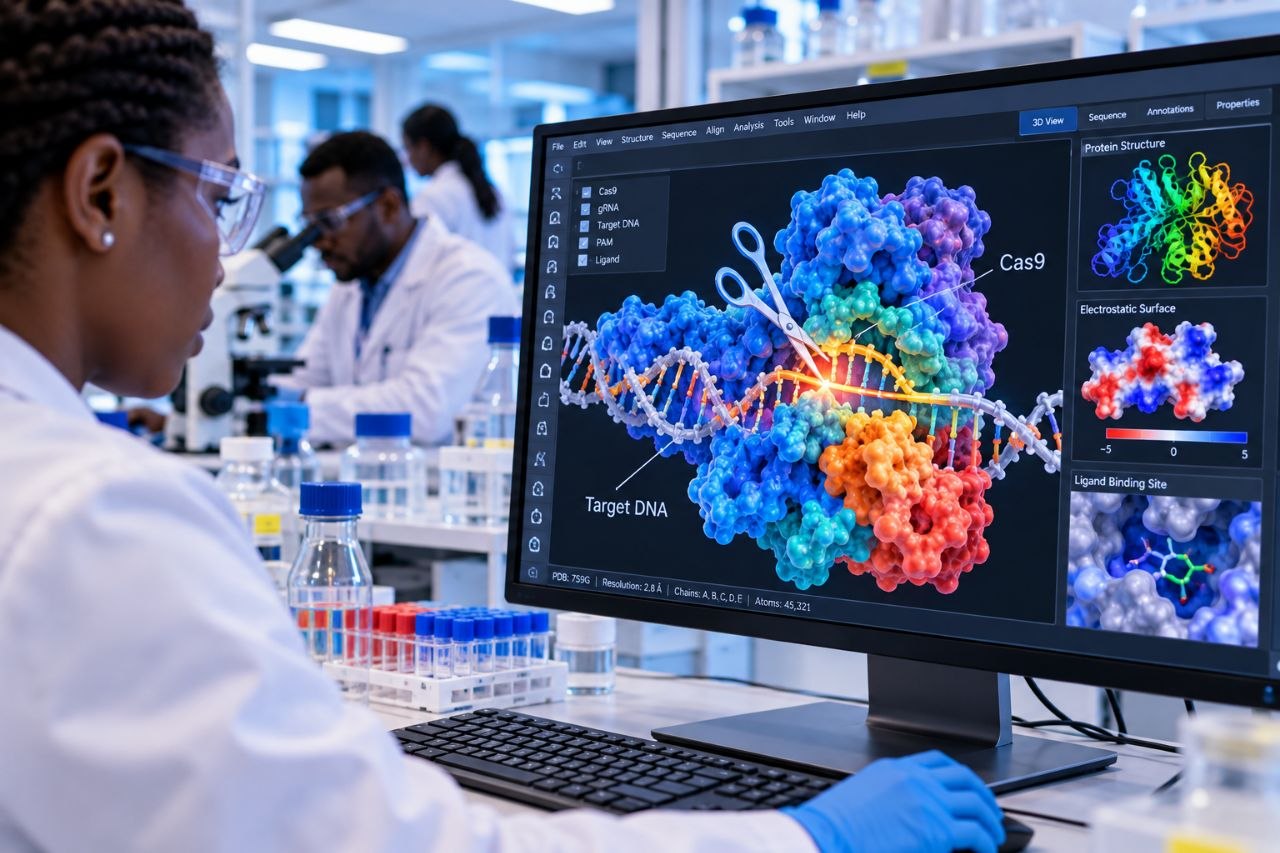
Researchers at UW Medicine’s Institute for Protein Design (IPD) have successfully created synthetic proteins that function like molecular scissors to chop up specific targets associated with devastating conditions such as Alzheimer’s disease and amyotrophic lateral sclerosis (ALS).
Published across two studies in the journal Nature, the breakthrough highlights how advanced artificial intelligence models are changing the landscape of biomedical research. By utilizing sophisticated AI tools developed at the institute, scientists were able to computationally design custom enzymes known as proteases.
How Artificial Intelligence Builds Custom Proteases
Proteases are a natural class of enzymes responsible for cutting other proteins at precise locations. Traditionally, modifying or discovering natural enzymes to target specific disease pathways has been an arduous and limited process. However, the team at the Institute for Protein Design used computing power to reverse-engineer protein folding.
“You have this catalytic capability to destroy one target, and then immediately your molecule can hop over to the second, third and thousands of different targets,” explained Anqi Chen, a postdoctoral fellow at the institute.
These computationally designed synthetic enzymes are engineered to dock onto and cleave specific disease-related proteins at chosen sites with high precision. Because they operate catalytically, a single engineered molecule can repeat the process thousands of times, offering immense potential for therapeutic applications.
Expanding Horizons for Future Therapies
While the initial studies focused heavily on proteins linked to neurodegenerative disorders like Alzheimer’s and ALS, the research team is already looking ahead. Scientists are currently expanding their targets to include proteins associated with malaria, chronic conditions, and various forms of cancer.
Furthermore, researchers note that this AI-driven protein design framework could eventually lead to custom treatments capable of neutralizing viruses or bacterial toxins. As the technology moves forward from computational models toward comprehensive testing, it opens an entirely new path toward precision medicines for diseases that have long lacked effective treatments.