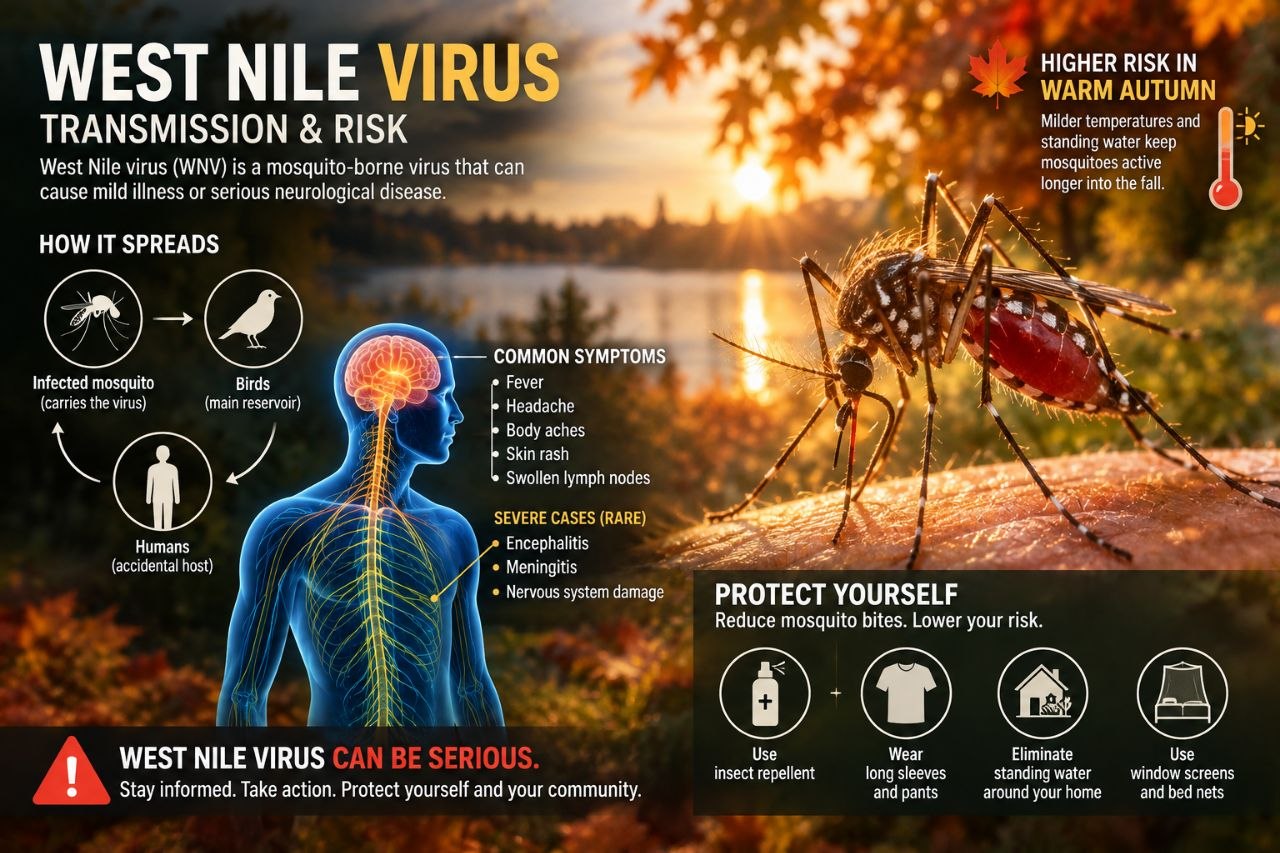
Health officials in North Carolina have issued warnings regarding high transmission levels of the West Nile virus following the deaths of two adults in the central part of the state. According to the North Carolina Department of Health and Human Services (NCDHHS), the fatalities highlight an extended season of mosquito activity fueled by prolonged warm weather stretching well into mid-October.
Rising Transmission and Seasonal Context
State health authorities announced the grim milestones as Centers for Disease Control and Prevention (CDC) data recorded 11 reported human West Nile virus cases in North Carolina as of October 6, 2026. While the specific counties of the two deceased individuals have not been publicly disclosed by NCDHHS, state surveillance earlier in the year documented positive tests in multiple areas. The state’s first human case of 2026 was reported in August in a Gaston County resident, alongside a routine blood donor screening in Mecklenburg County. State laboratories also detected the virus in mosquito pools across Cabarrus, Forsyth, and Mecklenburg counties as early as July.
Public health experts note that abnormally persistent warm weather has kept mosquito populations active much later into the autumn than usual. Local reports indicate that 2026 is currently tracking as the second-highest year on record for West Nile virus cases, trailing only behind the peak recorded in 2024.
Understanding West Nile Virus Risks
The vast majority of individuals who contract the West Nile virus experience either no symptoms or mild, flu-like signs. However, the CDC warns that about one in 150 patients develops severe neurological disease. This can manifest as encephalitis, which is inflammation of the brain, or meningitis, an inflammation of the membranes surrounding the brain and spinal cord. Both severe conditions carry a risk of fatality.
With mosquito activity remaining high due to unseasonably warm mid-October conditions, health officials continue to urge residents to take preventive measures. Recommendations include using insect repellent containing EPA-registered active ingredients, wearing long sleeves and pants outdoors, and eliminating standing water around homes where mosquitoes can breed.