China’s passenger vehicle market continued to experience a stark divergence between domestic retail performance and overseas expansion in September 2026. According to figures released by the China Passenger Car Association (CPCA), domestic car sales extended their ongoing downturn for a 12th consecutive month, weighed down by weak demand for conventional fuel vehicles and high fuel prices. However, robust vehicle exports provided a vital cushion, helping offset slumping local retail numbers.
Domestic Retail Slump and Fuel Vehicle Contraction
Passenger vehicle retail sales within China totaled 1.618 million units in September 2026, marking a 28.0% decline compared to the same period in the previous year, according to CPCA data. Reuters and other reports noted that the domestic downturn worsened from August’s 23.7% decrease. For the first nine months of the year, total retail sales reached 13.334 million units, representing a 21.7% year-on-year drop.
The contraction was particularly pronounced in traditional internal combustion engine vehicles. Domestic sales of conventional fuel passenger vehicles plummeted by 47.3% year-on-year to 526,000 units. Non-new energy vehicles (non-NEVs)—a category encompassing conventional hybrids—faced broad declines, with mainstream joint ventures, Chinese domestic brands, and luxury brands recording drops of 42%, 47%, and 41% respectively in non-NEV retail sales. Industry analysts pointed to high fuel prices as a major factor dampening consumer interest in conventional gas-powered vehicles.
Exports and New Energy Vehicles Provide Support
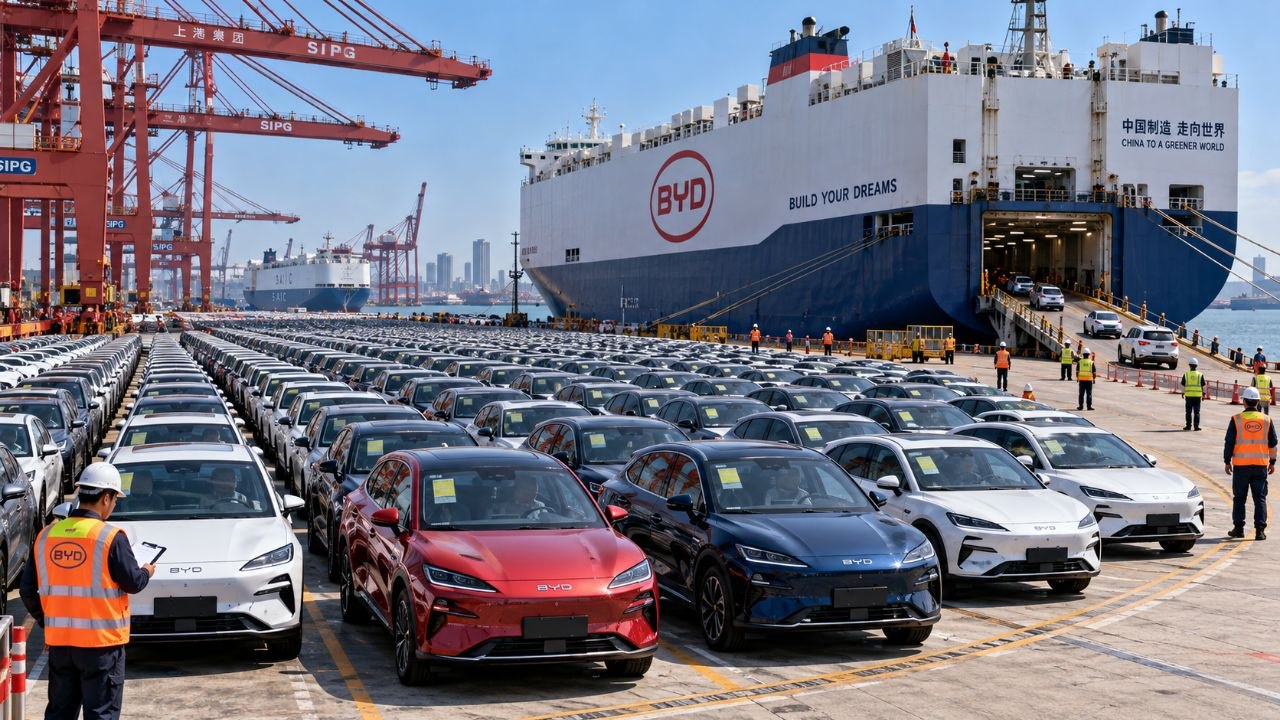
While local showrooms struggled, international markets proved resilient. Overall passenger vehicle exports surged significantly, rising 64.2% to 919,000 units according to broader industry data, allowing automakers to sustain wholesale volumes despite the sluggish home market. Major players like Tesla China capitalized on this overseas momentum, reporting strong performance with September wholesale sales reaching 95,366 Shanghai-built vehicles—up 5% year-on-year—driven by a 58.3% jump in exports to 30,529 units.
New energy vehicles (NEVs) also continued to claim a dominant share of the domestic market, even as retail sales for domestic passenger NEVs dipped 12.1% year-on-year to 1.142 million units in September. Despite the local retail dip, NEVs captured a substantial 68.5% share of China’s domestic passenger vehicle market, highlighting an ongoing structural shift toward electrification even amidst broader economic pressures.