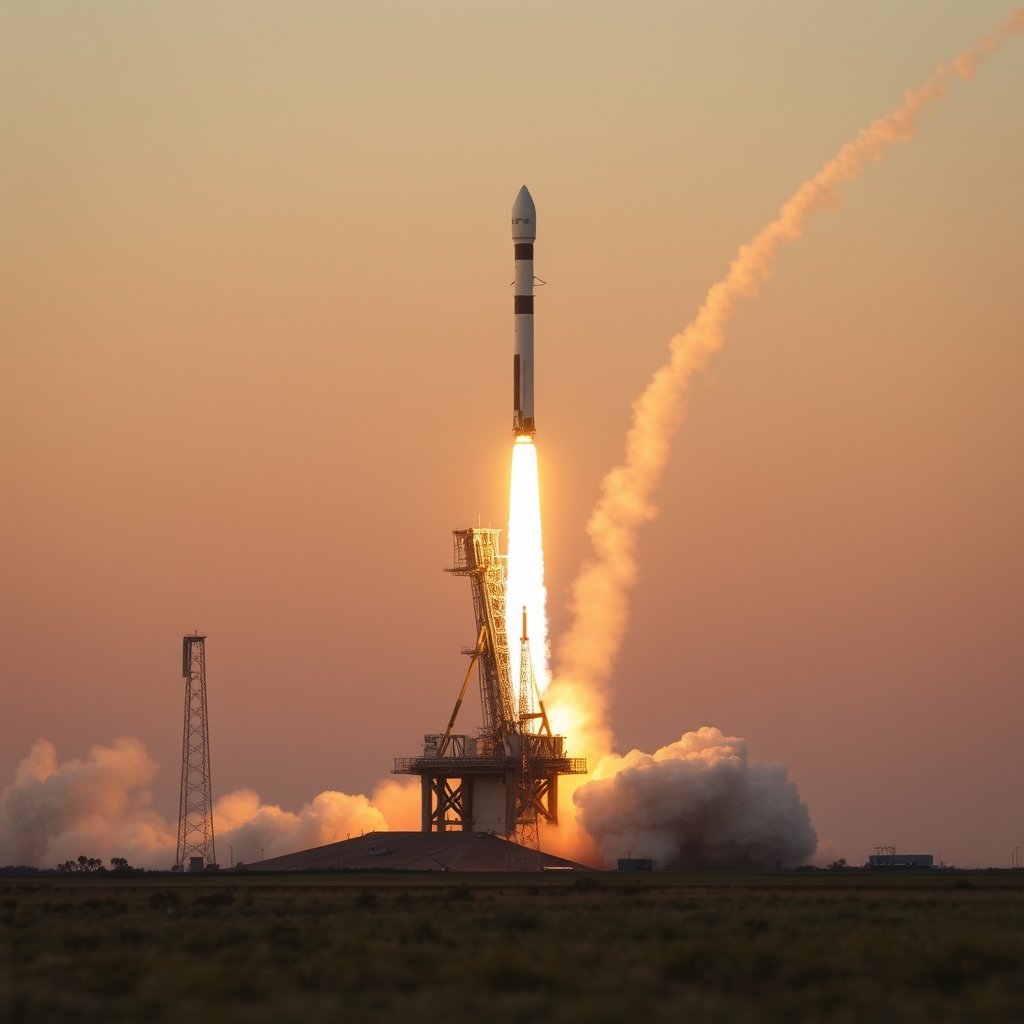
SpaceX launched its Starship Flight 15 test mission from the company’s Starbase facility in South Texas, successfully sending the upper stage spacecraft into orbit but aborting a planned landing catch of the massive first-stage booster.
The early evening launch took place under ideal weather conditions. Calm atmospheric winds allowed the rocket’s thick white exhaust plume to hang in the sky for minutes as the vehicle climbed toward space against the setting sun. While the primary objective of reaching orbit with the Starship upper stage was accomplished, the flight ended with a dramatic ocean impact for the Super Heavy booster.
Booster Diverted to Gulf After Technical Issue
During the return phase of the mission, the first-stage Version 3 booster descended rapidly back toward Earth. SpaceX had intended to guide the vehicle back to the Starbase launch tower to be caught by mechanical arms. However, an unspecified technical issue arose during the descent.
Flight controllers issued a command for the booster to divert away from the launch pad facility and land in the Gulf of Mexico. The diversion resulted in a powerful explosion upon impact with the water, creating a blast that observers noted was visible and audible from more than 10 miles away.
Reusability Goals for Version 3 Starship
The attempted recovery of the Version 3 booster represents a critical step in SpaceX’s long-term plan to achieve rapid rocket reusability. SpaceX has previously landed and reflown earlier iterations of Starship boosters, but it has not yet successfully caught and reused the updated Version 3 hardware.
SpaceX aims to catch boosters directly at the launch pad, allowing teams to inspect, refurbish, and quickly fly them again. Although the Version 3 booster recovery fell short on Flight 15, the successful orbital insertion of the upper stage provides valuable data for upcoming tests.
Founded in 2002 by Elon Musk and headquartered in Hawthorne, California, SpaceX continues to iterate on its Starship system as part of its ongoing development of fully reusable space transportation infrastructure.