The United States is reevaluating its strategic posture and actively weighing reductions to its US military footprint across the Middle East. Ongoing conflicts, escalating regional tensions, and evolving security dynamics have forced Washington to reconsider how it deploys and maintains its forces in the region.
Shifting Strategy for Middle East Bases
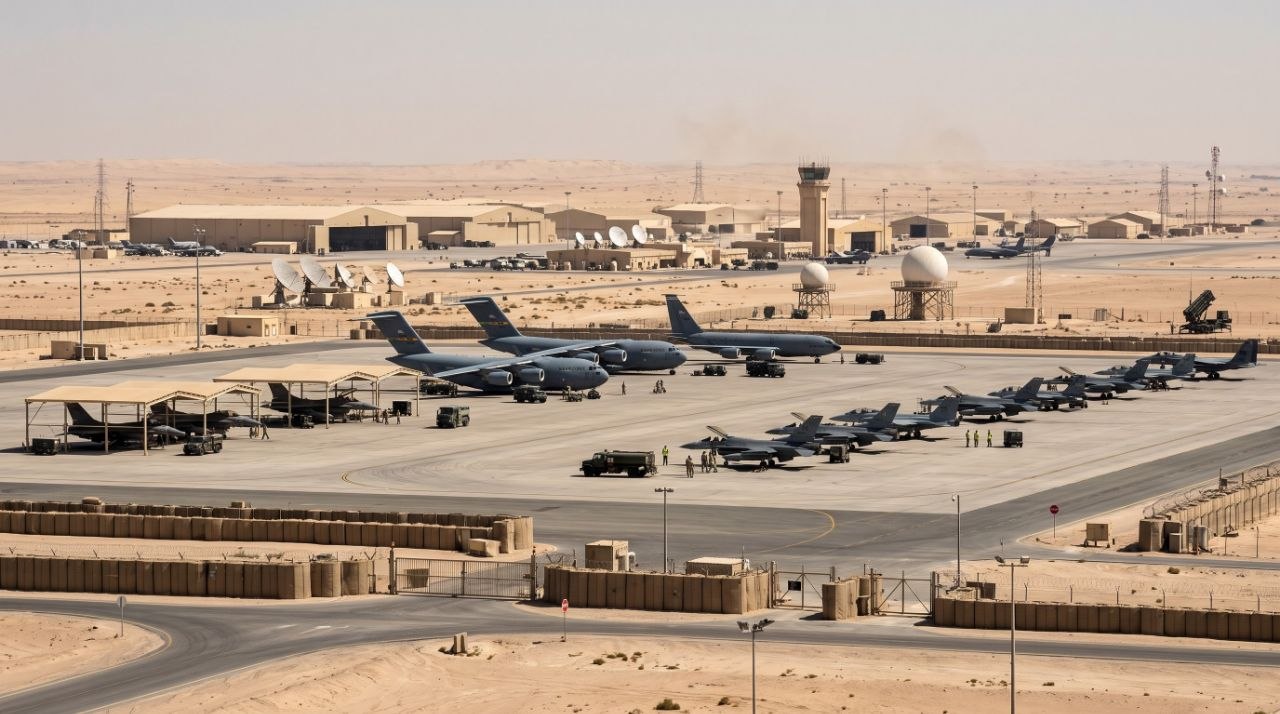
The reassessment comes in the wake of heightened hostilities involving Iran, which has targeted regional installations with drones and missiles. Military analysts and defense officials note that recent conflicts have exposed the vulnerabilities of large, fixed military installations in the Gulf and surrounding areas. In response, the Pentagon is reviewing whether to shift toward smaller, more dispersed deployments or move certain forces westward.
The strategic shift is already visible outside the Gulf. Earlier in the year, the Trump administration completed a withdrawal of military personnel from Syria. Between February and April 2026, the U.S. military handed over or departed from key facilities, including the al-Tanf base, the al-Shaddadi military base, and the Qasrak Air Base, transferring security responsibilities to local forces.
Vulnerabilities Exposed During Regional Conflict
Between January 2025 and June 2026, Iran-backed militias carried out nearly 200 attacks against U.S. forces in Syria and Iraq. Furthermore, Iranian strikes have impacted Gulf bases, leading experts to question the long-term viability of traditional base management. Mark Cancian, a senior military expert at the Center for International and Strategic Studies, noted that the war has highlighted the inherent risks associated with permanent, large-scale fixed bases.
In addition to operational vulnerabilities, diplomatic friction has also influenced Washington’s military planning. Recent disputes with regional partners, such as Saudi Arabia regarding the management of the Strait of Hormuz, have further complicated bilateral security ties and fueled discussions about scaling back the U.S. presence in the kingdom.
Future Regional Security Arrangements
As the U.S. contemplates a downsized military presence, regional governments are preparing for potential shifts in local security dynamics. Iran has demanded the closure of U.S. military bases as part of any long-term ceasefire negotiations, a condition Washington is unlikely to meet fully. However, the practical limitations of modern drone warfare and shifting strategic priorities suggest that a leaner U.S. footprint may become a permanent reality.
Analysts suggest that as traditional U.S. protection levels decline, Gulf states may diversify their security alliances, seek new regional arrangements, or rely more heavily on domestic defense manufacturing and alternative diplomatic mediation facilitated by international partners.