
Developer Builds Free Open-Source Adobe Clones Using AI
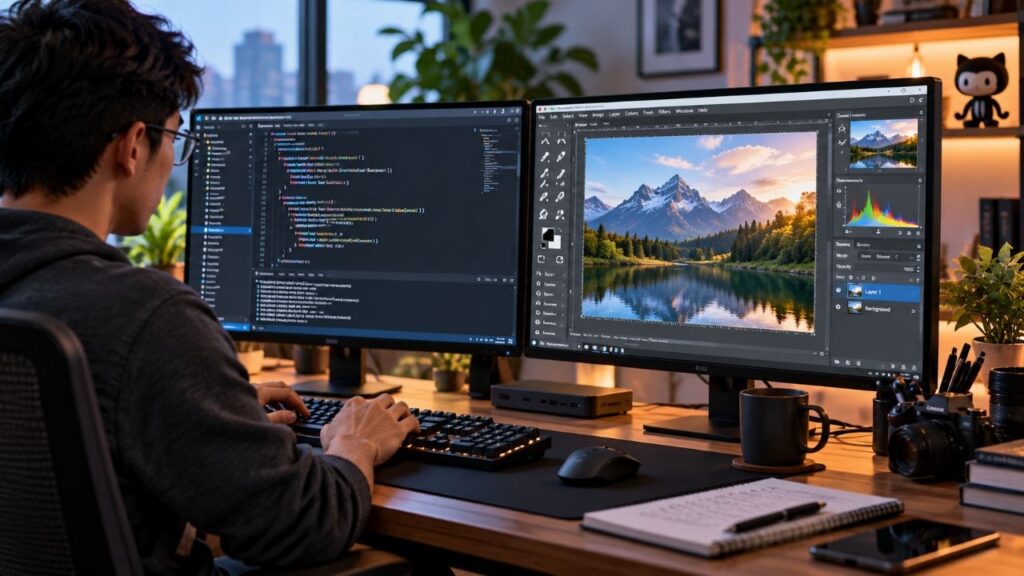
An Atlanta-based developer has sparked widespread discussion across the tech community after releasing a suite of free, open-source applications designed to replicate major creative software. Declaring that “software is over,” the developer used artificial intelligence to accelerate a reverse-engineering process that traditionally demands years of coordinated team effort.
Developer Brandon Thomas unveiled Artcraft, a collection of applications aimed at mimicking flagship creative tools including Photoshop, Illustrator, Premiere, and After Effects. Built using Anthropic’s Claude Opus 5.5 and the Rust programming language, the project provides free alternatives—such as PhotoCraft, VectorCraft, FilmCraft, and LightCraft—with no subscription fees or mandatory user accounts.
The Motivation and Technology Behind Artcraft
Thomas cited widespread user frustration with costly software subscriptions and cancellation fees as a primary motivator for the project. The release also follows recent high-profile regulatory scrutiny facing major software vendors, including a notable $150 million settlement between Adobe and the U.S. government regarding subscription terms.
To construct the suite, Thomas leaned heavily on advanced AI capabilities. By leveraging Claude Opus 5.5 alongside Rust, the developer rapidly reverse-engineered core components of established creative suites. The resulting applications run both on desktop systems and within web browsers, offering familiar layouts for digital artists and video editors seeking alternatives to expensive proprietary platforms.
Capabilities and Current Limitations
While the release has captured global attention for its sheer ambition, tech reviewers and the creator himself emphasize that the applications are currently in early alpha or pre-alpha stages. Programs like PhotoCraft successfully open test files with layers and curves, but users have noted that the software remains buggy, unpolished, and missing many advanced features found in mature commercial programs.
In addition to the creative suite tools, the project has expanded into office productivity. Thomas’s studio subsequently published WordCraft, GridCraft, and DeckCraft on GitHub—open-source alternatives to Microsoft Word, Excel, and PowerPoint that support standard file formats like DOCX, XLSX, and PPTX.
Thomas acknowledged that while the AI-assisted tools dramatically lower the barrier to entry for software creation, they also introduce significant hurdles regarding stability and code maintenance. Rather than signaling an immediate end to traditional software companies, developers and analysts view the release as a striking demonstration of how generative AI is shifting the threshold of what a single programmer can build. Community contributions are expected to play a vital role in determining whether these experimental open source adobe clones can evolve into reliable, daily-driver tools for professionals.