
Francis Halzen Wins 2026 Nobel Prize in Physics for Ghost Particle Hunt
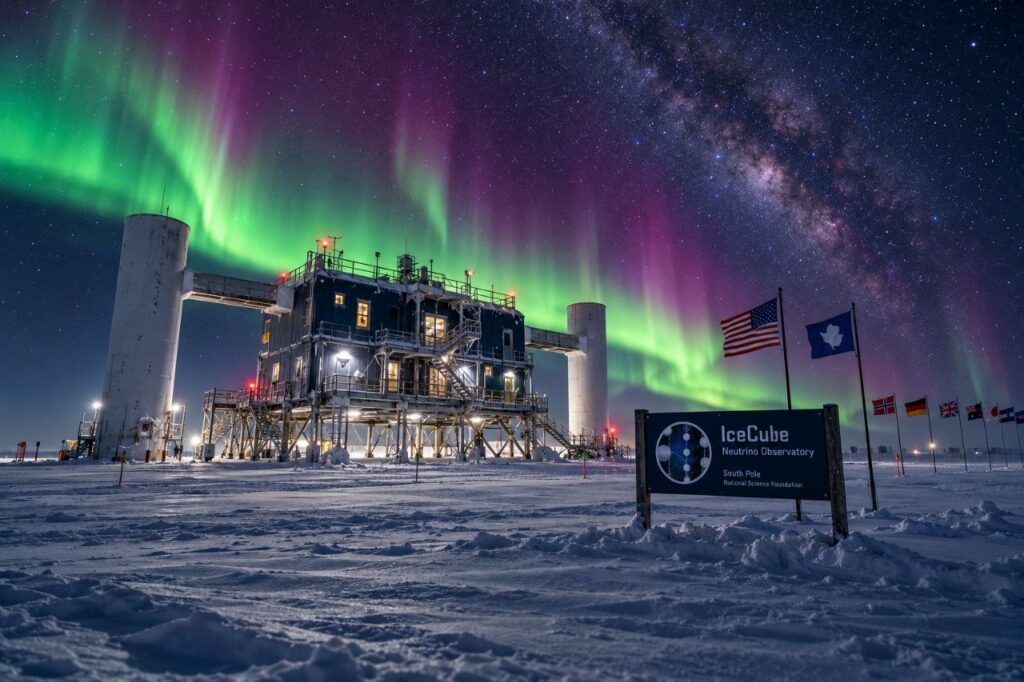
Belgian-American particle physicist Francis Halzen has been awarded the 2026 Nobel Prize in Physics for his groundbreaking work tracking elusive cosmic particles in Antarctica. The Royal Swedish Academy of Sciences announced the prestigious honor in Stockholm, recognizing Halzen for his leadership in creating and developing the IceCube Neutrino Observatory.
The academy honored the 82-year-old researcher “for decisive contributions to the IceCube Neutrino Observatory and the discovery of high-energy neutrinos of astrophysical origin.” Neutrinos, frequently referred to by scientists as “ghost particles,” are extremely difficult to detect because they rarely interact with matter, streaming freely across the universe and carrying uncorrupted clues about cosmic evolution.
Building the Antarctic Ghost Particle Detector
Nearly four decades ago, Halzen began pursuing an ambitious plan to construct a massive detector deep within the Antarctic ice sheet at the Amundsen–Scott South Pole Station. The resulting IceCube observatory uses a cubic kilometer of pristine ice outfitted with thousands of optical sensors to capture the faint flashes of light produced when high-energy neutrinos interact with ice molecules.
The data collected by the Antarctic facility has allowed researchers to trace high-energy neutrinos back to deep space origins, effectively opening a brand-new window into astronomy. Prior to receiving the Nobel honor, Halzen earned widespread acclaim for his efforts, including being dubbed “Neutrino Man” by Smithsonian magazine in 2014, alongside receiving the Balzan Prize, the Bruno Pontecorvo Prize, and the American Physical Society’s 2026 Medal for Exceptional Achievement in Research.
Reactions and Prize Details
Halzen, who was in Italy when the announcement was made, described learning of the honor as an unexpected surprise. As the sole recipient of the 2026 physics prize, he will be awarded the full monetary prize of 12 million Swedish kronor, which amounts to approximately $1.2 million.
Physics experts note that the detection of astrophysical neutrinos marks a monumental leap in humanity’s understanding of the universe. By capturing these cosmic messengers, scientists can continue investigating high-energy phenomena and potential unknown physical processes occurring in the deepest reaches of space.