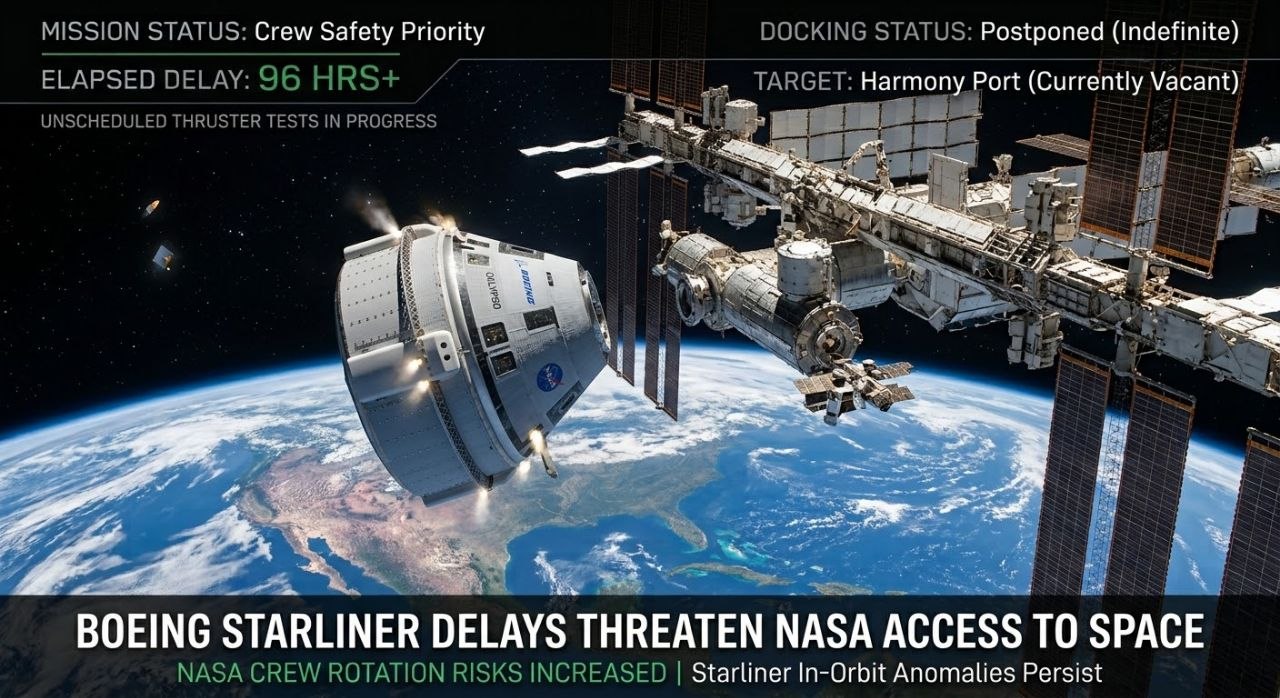
Ongoing technical failures and extensive setbacks with the Boeing Starliner program have left NASA officials re-evaluating the agency’s long-term strategy for crewed spaceflight. What was once envisioned as a reliable secondary taxi to the International Space Station has instead turned into a high-stakes logistical challenge, pushing crewed flights out significantly and forcing the agency to weigh its options.
The Growing Crisis for NASA and Boeing
The aerospace giant has faced mounting pressure following a series of propulsion and parachute anomalies that grounded previous test flights. With crewed missions potentially delayed for several years and discussions around utilizing alternative launch vehicles, confidence in the current development timeline has eroded. Industry experts note that these persistent hurdles not only impact schedules but also place unprecedented strain on NASA’s reliance on commercial partnerships.
What Next for Commercial Spaceflight?
As NASA reviews the path forward, the agency is exploring unpiloted test flights to gather critical data before putting astronauts back on board. However, the extended timeline raises critical questions about redundancy in low-Earth orbit transport. Without a fully operational Starliner spacecraft, the burden falls heavier on competing systems, making the resolution of these aerospace challenges more urgent than ever for the future of American space exploration.